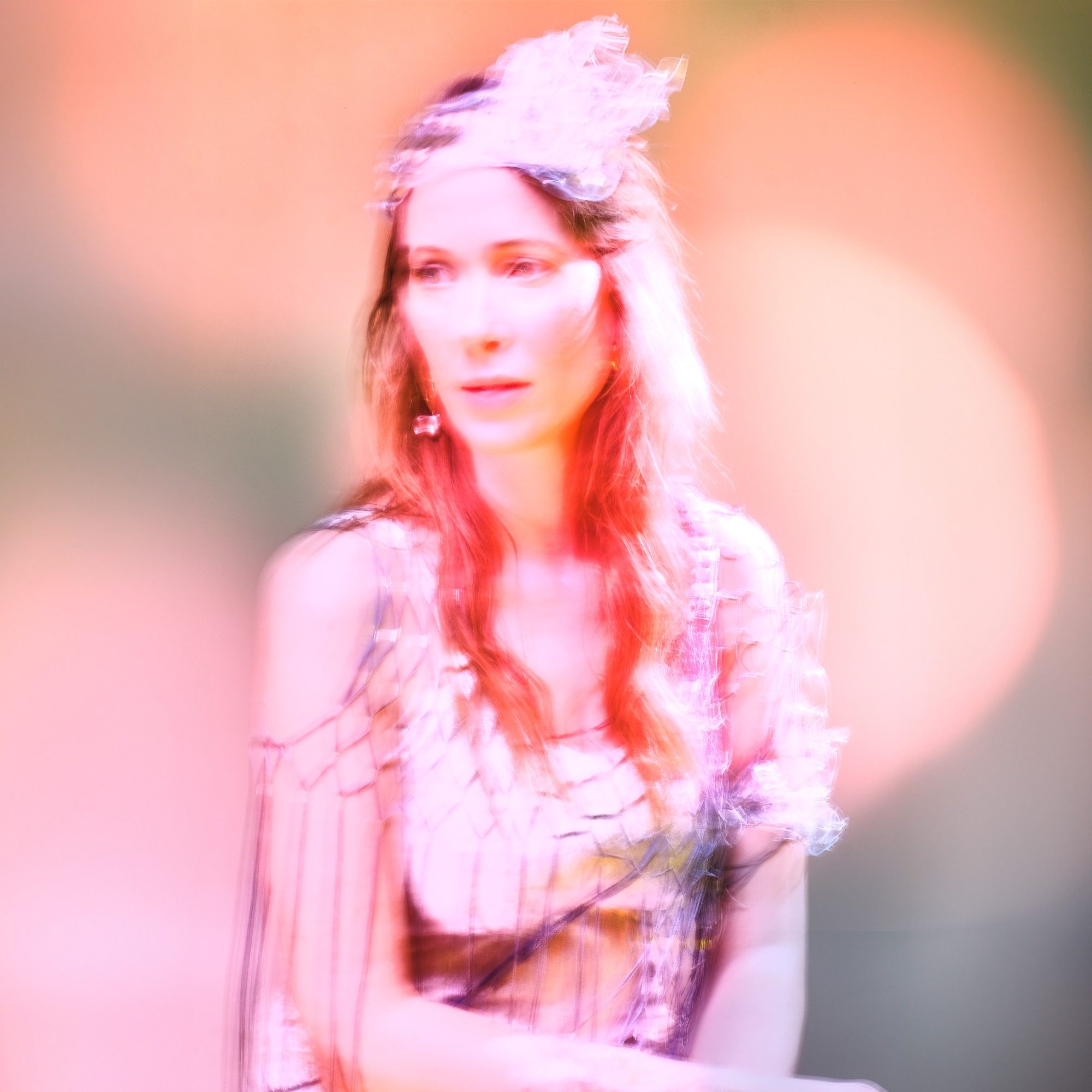

With “South Sudan” out now, we took some time to hear from Roxy Rawson. Read below to learn more about Roxy Rawson, the story behind “South Sudan,” and what’s to come.
Hi Roxy Rawson! Let’s start with how did you choose your artist name?
Hi there, it’s actually my first and second name :). My full first name is Roxanna, but my friends call me Roxy.
What city are you from, and where are you based now?
I’m from Hitchin, Hertfordshire in the UK. I’m currently living in Berlin (and love it here :)).
At what point in your life did you decide to pursue a career in music? How did you get started?
If the definition of a career in music involves multiple avenues, I think I knew from very young that I would be doing something in the music field when I grew up. I studied music from a young age and it was my focus while I was growing up and I then studied music at University. After graduating, I began teaching and performing, so I think that I always knew that this was the direction I would be going in.
How would you describe your sound?
My music sits somewhere between chamber folk and orchestral pop. The songs that I wrote for the album that I’m gradually releasing began as intimate chamber folk arrangements, with small groups of woodwinds and strings. And, my first vocal recordings reflected that closeness. But, I knew that I wanted it to sound more expansive and cinematic in scale.
I later collaborated with orchestrator and composer Jherek Bischoff, who helped expand those foundations into fuller orchestral landscapes and production. What I love about his orchestral arrangements is that he never imposed grandeur for its own sake, he really followed the emotional arc and storytelling of each song, expanding in the moments that were already asking to open up. The orchestration always felt like a natural extension of the music.
After hearing his fuller production/orchestration, we decided to re-record most of the vocals. I wanted to preserve the intimate, confessional quality of the storytelling, while also matching the emotional intensity of the orchestra. The re-recorded vocal performances have a greater dynamic range than the original recordings – they still have moments of closeness and vulnerability, but also rise to meet the power of the orchestration when the songs call for it. I think that gave the album a much stronger sense of cohesion.
Do you have any hobbies outside of music? What do you do to stay creative?
Outside of music, I love spending time with my friends here in Berlin. Community is a big source of inspiration for me and I find that some of my best ideas come from creative conversations and shared experiences.
I love Salsa dancing whenever I get the chance. It’s totally freeing to move with the music without having anything to do with the performance of the music itself – it’s a wonderful way for me to reconnect with joy and spontaneity.
At the moment, I wear a few different hats. Alongside making music, I teach music part-time and am the Co-Founder of The Feral Folk Festival in Berlin, so I’m surrounded by creativity in different forms. It’s a busy balance, but staying connected to my friends, live music and the arts community here in Berlin feeds back into my songwriting.
Can you tell us about your work for the Feral Folk Festival in Berlin?
I co-founded this festival in 2024 in collaboration with the Famous Gold Watch Studio in Berlin. It’s a community centered music festival that celebrates the city’s vibrant folk scene. The festival aims to showcase local and unsigned artists and bring their music to a wider audience while creating an inclusive space for people to connect through live music.
Who are some of your main musical influences?
I am currently really vocally inspired by Caroline Polachek, Annie Lennox and Kate Bush. For the orchestration and arrangement side, I feel most influenced by Anna Von Hauswolf, Agnes Obel and Aurora. I also love the orchestrations of the Irrepressibles and Jherek Bischoff. I discovered a composer called Caroline Shaw recently that I’m really enjoying.
What’s one of the proudest moments of your music career so far?
There were some highlights earlier in my career when I supported Sia and got to perform at the Royal Albert Hall, but on a personal level, the most rewarding moments would have to be getting to work with Jherek Bischoff on this album and the moment I finished a very intense 10-day long vocal recording session with the support of my vocal coach Gina Hudson. We brought together everything I’d been working on the previous five years and focused that into those 10 days of recording sessions, and I felt a deep sense of accomplishment (as well as exhaustion, but in a good way :)).
What would you say are the greatest lessons that you’ve learned so far?
Living with chronic illness taught me the importance of slowing down and being present. In a culture that’s always encouraging us to chase the next milestone, I’ve learnt that the best moments of my life are when I’m able to be in the present moment and appreciate what’s happening right now.
It’s something that I’m still learning, but I think the most satisfying way to live comes from that sense of presence rather than from the need to prove my usefulness.
Can you tell us about your work with Compassionate Body Listening?
During my recovery from Lyme Disease and Chronic Fatigue Syndrome, I created a methodology to calm the nervous system and heal from chronic illness, by calming the nervous system and reducing inflammation, called Compassionate Body Listening. You can find out more about it at www.compassionatebodylistening.org. I further developed this methodology over the last five years to combine Polyvagal theory education and now teach others this methodology in a course that I host once a year.
Now onto your release, “South Sudan.” What inspired this song?
Earlier in my life, after graduating from my music degree and a training at the Paris VI Conservatory, I retrained in international development and worked for NGOs for a period of time. This song was a synthesis of the feelings and experiences that I had after working for an NGO with projects in Sudan around 2010–2011, during a period of profound political inequality and unrest in the lead-up to South Sudan’s independence.
What is “South Sudan” about?
Through working with an NGO that had projects in Sudan, I got to meet incredible people who cared so much for each other and their communities. It was also harrowing to witness how little the Sudanese Government cared for its citizens and used its income to enrich itself rather than invest in the communities that matter so much. This is rife all over the earth: governments that extract from their people rather than act with responsibility and care. I wanted to give voice to this state of affairs through this song. I deeply feel the world would be a better place, if the communities that already care for each other and the Earth so well were truly supported.
What was the inspiration behind the cover artwork for “South Sudan?”
I think through this song I wanted to exalt and highlight the hearts of people who care for each other and earth and to find artwork that symbolized this sense of people’s care for the earth, with a sense of elevation or magic.
It’s of course sensitive to invoke a particular land and culture and the video designer Dariia Migalova and I both wanted to approach the song’s imagery with care.
Dariia consulted with her Sudanese friend Bina about Sudanese art and symbolism and when Dariia and I were brainstorming about images for this piece, we talked about the human body’s connection with the earth and landscape, with the idea of forming a kind of topology, combining both male and female together. Dariia then synthesized this into her own unique vision.
What was the creative process like when making “South Sudan?”
I wrote the first arrangement of this song while experimenting writing for an orchestra for the first time. I had heard Jherek Bischoff on the radio in 2017 and hearing his orchestration really inspired me at the time. It was incredible to be able to actually work on this track with him several years later. He augmented and refined my first attempts at orchestrating this track.
I remember I wrote a kind of childlike melodic line for the Celeste and some sweepy strings began to emerge over a strange drum line.
On a bus in Sudan a few years earlier, I had heard one of the most beautiful pieces of music I’d ever heard. I worked out with a drummer friend of mine, Greg Rawson, that the rhythm was likely on 1, which is why it sounded so complex. I wrote the drum pattern for this song, based on my first impression or experience of that tumbling drum pattern I heard on the bus.
How long did it take to complete “South Sudan?”
In full, a number of years! It’s one of the songs that I wrote a long time ago when I was working for an NGO in my twenties, but it went through revisions and different arrangements. I guess if all the moments working on the song were totally compressed, the time it took to complete could be a couple of weeks if we include the string recordings, the production by Jherek, the vocal work with Gina Hudson and composition by myself.
What is your favorite lyric in “South Sudan” and why?
“South Sudan, she is my land- she has sparks in her eyes and lights up the skies. And with her great bony elbow, she crushes them/those, who don’t hunger and thirst for the fat of the land, and the kindness of man.”
I love the idea of the Earth personified by a woman and how she powerfully preserves what is right and true.
What do you hope fans take away from “South Sudan” and your music in general?
In general, I hope that people feel supported in their feelings, all of them, including those that are sometimes viewed as negative, weak or vulnerable. And, I hope that people feel elevated and reminded of their magical nature and spiritual origin.
What’s next for you? Are you working on any upcoming projects, or do you have any upcoming shows that we should be on the lookout for?
I’ll be performing at the Kaustinen Folk Festival in Finland on the 13th and 14th of July, and I’m hoping to head back into the studio for more recording in August.
I’ll be releasing two more singles over the coming months, which I’m excited to share.
Alongside that, I’ll be busy with the Feral Folk Festival – which takes place this autumn – a project that’s very close to my heart and a wonderful celebration of the folk community in Berlin.
Where can we follow you on social media?
https://www.instagram.com/roxyrawson
https://www.tiktok.com/@roxy.rawson
https://www.facebook.com/RoxyRawson
Thank you for the great interview; wish you much continued success!