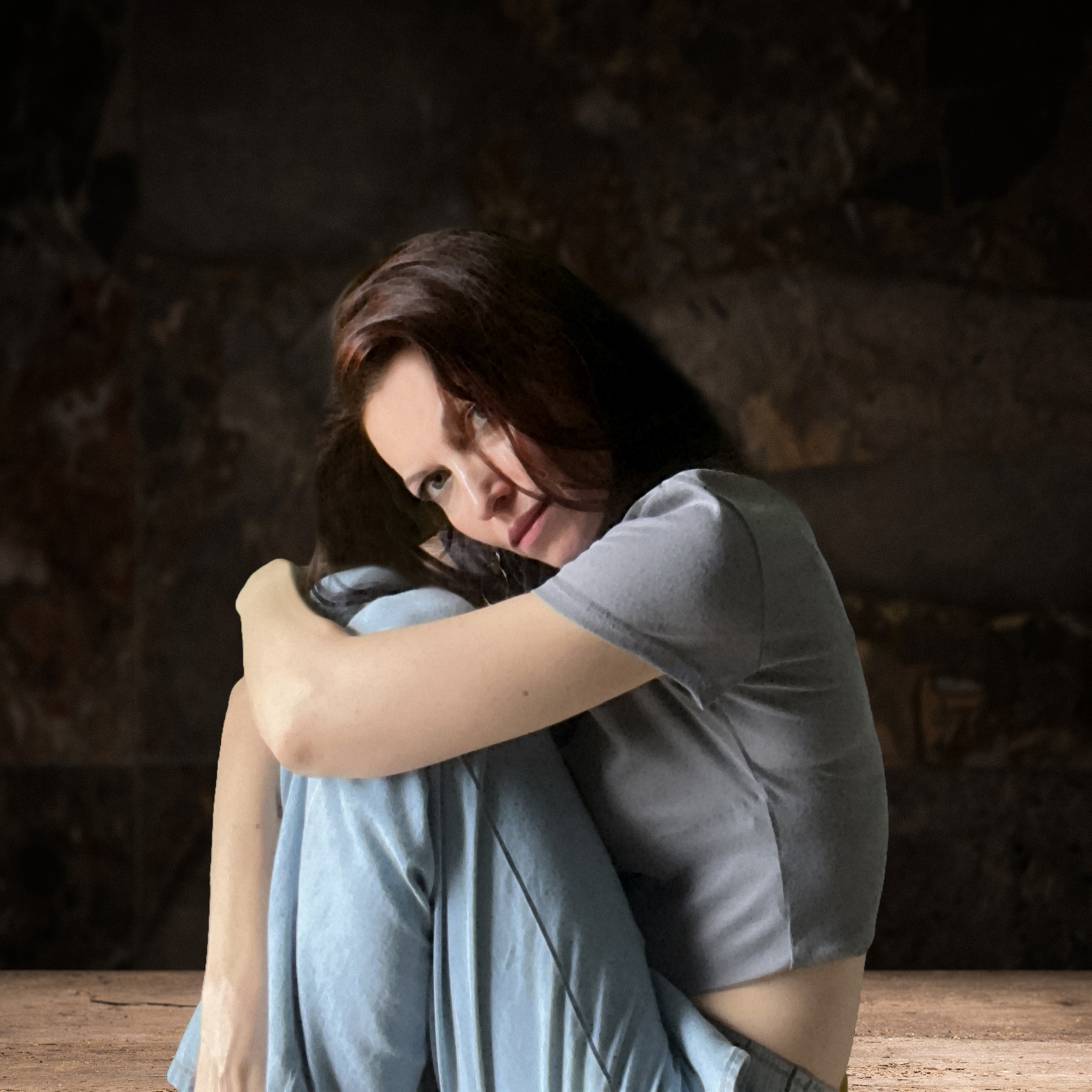

Lana Crow is a Kazakh-born singer-songwriter who discovered her musical voice at age five while attending a music school, only to put her dreams on hold for several years due to health issues. After relocating to Spain from the UK during COVID period, and reigniting her passion for songwriting as an adult, she released her debut indie pop album, I Will, in 2022, followed by her sophomore record, “Live It”—a deeply introspective collection blending guitar-pop, synth textures and anthemic melodies. Lana Crow’s music is characterised by raw emotional honesty and a determination to turn personal struggle into universal expression, making her a compelling voice in the current independent pop scene.
With “Orwellian Times” out now, we took some time to hear from Lana Crow. Read below to learn more about Lana Crow, the story behind “Orwellian Times,” and what’s to come.
Hi Lana Crow! Let’s start with how did you get your artist name?
It is my real name!
What city are you from, and where are you based now?
I was born in Karaganda, Kazakhstan, and now live in the province of Malaga, in southern Spain.
At what point in your life did you decide to pursue a career in music? How did you get started?
To be honest, I can hardly say that I’m pursuing a career in music, as I genuinely don’t see how I could make money from it — though I’d love to be able to.
I started writing and releasing songs because most of them come to me in dreams, and I believe that the dream state connects us to something higher — something beyond our understanding. So, I decided not to ignore it.
How has your upbringing played a role in shaping who you are and defining your sound?
The environment that I grew up in was tough, and music was my escape from reality. Growing up in Kazakhstan, I loved American, British, and French songs. I didn’t understand the words, but it was always about the melody for me. I actually preferred not to understand the lyrics so I could immerse myself purely in the sound. I guess as a result of that, I love to create sounds that have the ability to distract people from their incessant thoughts. That’s the idea anyway — whether I actually manage to achieve that is another matter.
How would you describe your sound to readers who may not be familiar with you?
It’s a mix of indie pop and pop rock, and I would say that I’m leaning toward an ’80s sound. You might hear a bit of A-ha, a bit of Coldplay.
What prompted you to start writing songs?
I believe that we are all talented — every single one of us. But we can only truly discover our talents when we are at peace with ourselves and with the world. It’s about not trying to be someone else, and not forcing others to adapt to you — because that’s just another, darker form of seeking validation. I spent most of my life trying to be someone else because, in my own eyes, I never felt worthy of anything good. Rewriting my childhood programming took many years, but I’ve made huge progress and am finally able to express myself. Until three years ago, the idea of me writing a song was unthinkable. So, in short, it was my authentic self that prompted me to start writing. Life truly is full of surprises.
Do you have any hobbies outside of music? What do you do to stay creative?
I meditate. I don’t really have any hobbies outside of that — I have two kids and a small business to look after, so I keep very busy — too busy for my liking, to be honest.
Who are some of your main musical influences?
I would say Coldplay, Bob Moses, the Killers and A-ha.
What’s one of the proudest moments of your music career so far?
TJPL News offered press coverage of “Orwellian Times,” which I found quite significant.
What would you say are the greatest lessons that you’ve learned so far?
You cannot be happy unless you’re honest with yourself and with others. You have to be authentic — only then can you learn to love yourself enough and start enjoying life.
Now onto your release, “Orwellian Times.” What inspired this song? What is “Orwellian Times” about?
The song was inspired by the media attack on Israel. I am not Jewish, and I would absolutely hate to be Jewish right now. Over the last few years, we have witnessed an intense death toll in Yemen, with over 233,000 people dead, and more than 755,000 in Sudan at the highest “catastrophic” hunger levels — yet these crises received almost no media attention until very recently. Meanwhile, Gaza dominated the headlines every day. The BBC is now answering for its biased reporting on the war amongst other matters, which highlights how corrupt the media currently is. In a modern, supposedly intelligent world, it seems unthinkable that media outlets would take statistics from an invested side without verification. Of course Hamas would inflate casualties and even misreport ages — putting a child on the death certificate instead of a man — to elicit sympathy from the West. But, we need to be wiser than that. Sadly, we are not, and public opinion is easier to manipulate than ever. There is something deeply sinister about how the world can so easily withhold compassion from Jews simply because they are Jews.
At its core, the song is about the ease with which people can be manipulated into thinking in a certain way and convincing themselves they are “good” and “righteous” by condemning others rather than showing compassion. Many of those voicing the loudest opinions have never lived in either country and don’t understand what truly drives either side. Do those chanting “From the river to the sea, Palestine will be free” know that the literal translation from Arabic is “From the water to the water, Palestine is Arab; all the land is Arab?” I doubt it. Would Hamas and the Palestinians on the whole have a problem with Israel if Israel shared their religious faith? I doubt that even more.
What was the creative process like when making “Orwellian Times?”
I usually dream parts of my songs and then finish them while I’m awake — and this song was no different. I think, on some level, all the bewilderment I felt about the media coverage of the Palestinian war sank in quite deeply, and one night, I dreamed the first few lines of the verse for “Orwellian Times.”
I woke up in the middle of the night, hummed the tune into my phone, and wrote down a few lyrics. I started building the song later that day, and as far as I remember, it took full shape the next day.
I wasn’t planning to release it, but then George Harris (who goes by Brando Walker on Spotify), the producer I’d worked with on my latest songs, reached out to ask how things were going. I took that as a cue to ask him to produce this one — I’ve kind of learned to follow cues like that in life.
He was incredible with this track. It was the first time a producer delivered the perfect version on the very first attempt.
How long did it take to complete “Orwellian Times?”
The entire process, from writing the first lines of the verse to receiving the final track, took around three weeks.
What is your favorite lyric in “Orwellian Times” and why?
“Self-righteousness is killing all sense.” I think this phrase encompasses so much.
Self-righteousness is a very dark emotion. It’s impossible to feel righteous and virtuous without judging others — and without suffering from a great amount of ignorance.
It’s a state of mind that can be easily manipulated because it’s closely tied to the ego. All a manipulator has to do is reinforce the self-righteous person’s conviction that they are superior to others in their views.
Self-righteousness itself is not inherently evil, but it can be an instrument of evil. I believe most people go through a self-righteous stage in their lives — it’s something I experienced myself, only to later realize how ignorant I actually was.
What message or messages do you hope fans take away from “Orwellian Times” and your music in general?
I’m not really trying to send any particular message — this song is just me expressing myself. If people take something away from it, that’s great, but it is always up to the listener. I would love to be able to change the world for the better, but I am very aware of my limitations. We are all on a journey and the path is rarely straight.
In my music more broadly, I try to weave subtle invitations to breathe and simply be into my bridges. I hope people hear them.
What’s next for you? Are you working on any upcoming projects, or do you have any upcoming shows that we should be on the lookout for?
I have no plans. I am looking forward to Christmas though!
Where can we follow you on social media?
https://www.instagram.com/lanacrowmusic
https://www.youtube.com/@LanaCrow
Thank you for the great interview; wish you much continued success!