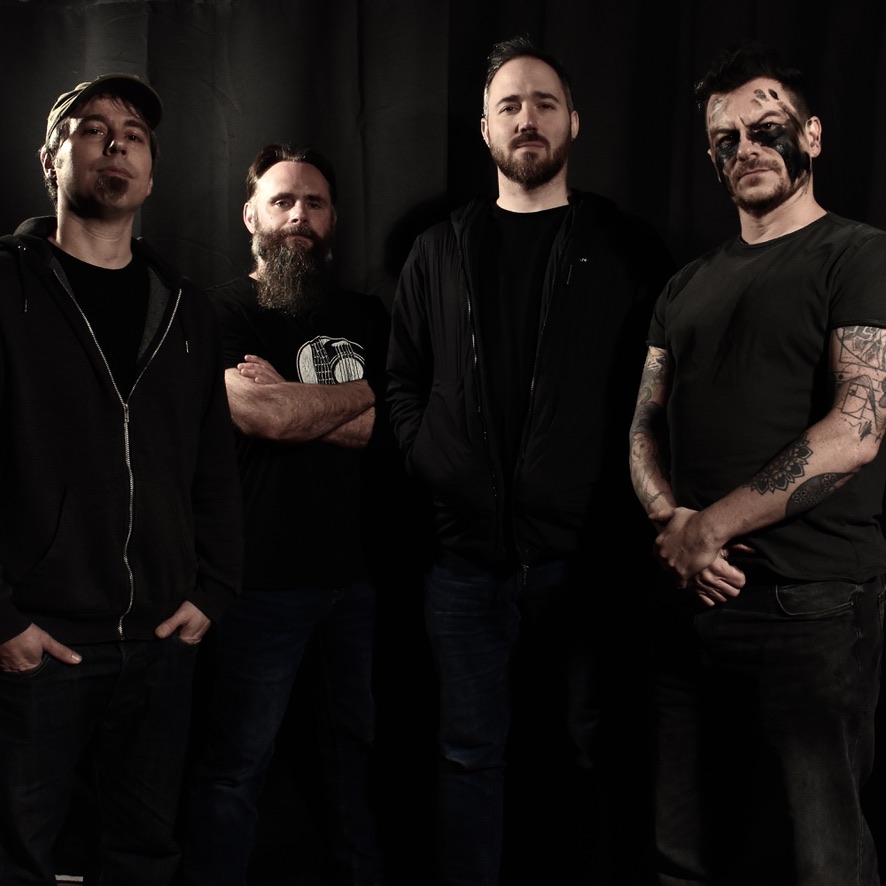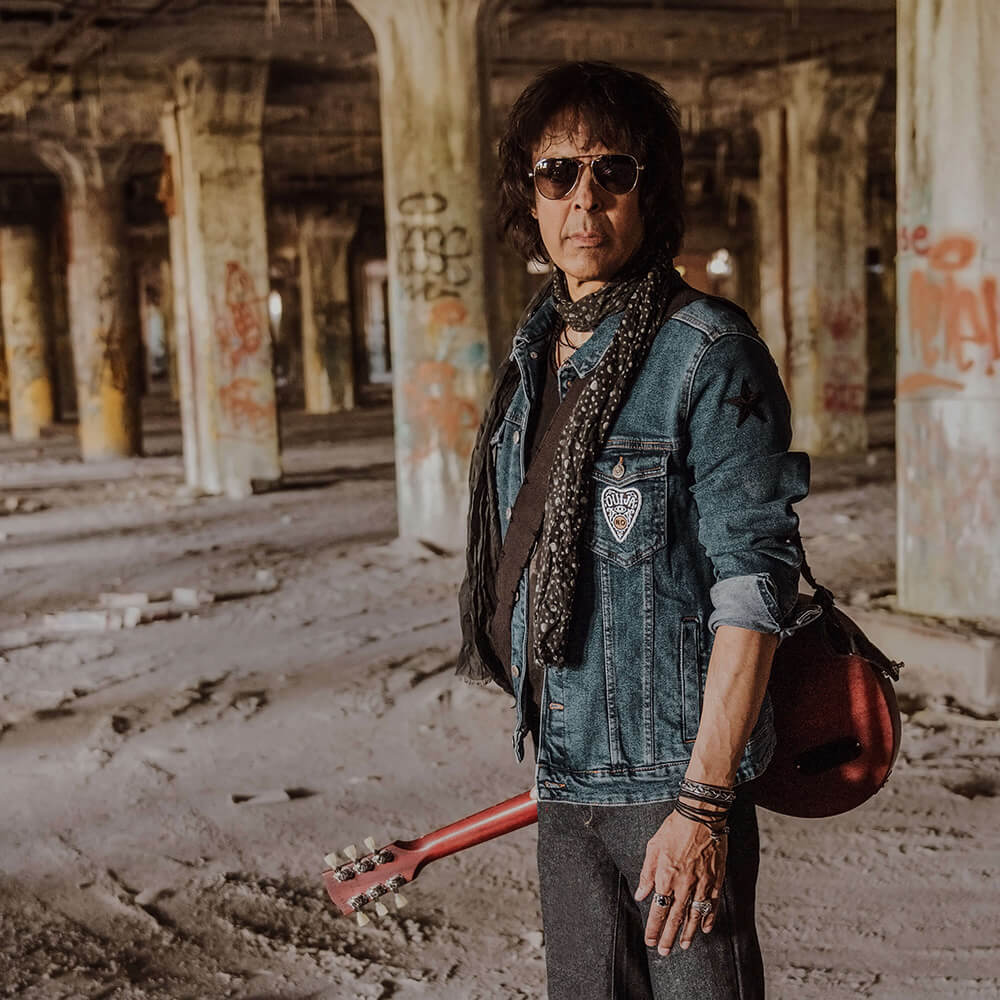

Criminal Hero is a Canadian rock project founded by Rick Harkness. Influenced by seventies and eighties rock and shaped during time spent in Detroit, the project emerged from a return to songwriting rooted in rhythm, structure, and forward momentum. The recordings were later finalized and mastered in Vancouver, where the project’s identity came fully into focus. Criminal Hero explores rock as both a release and a reflection, balancing energy and lift with pointed observation and restraint.
With the debut single, “You Better Believe,” out now, we took some time to hear from Criminal Hero. Read below to learn more about Criminal Hero, the story behind “You Better Believe,” and what’s to come.
Hi Criminal Hero! Let’s start with how you got your artist name?
Criminal Hero emerged from a tension that I’ve always been interested in, namely how the same traits can be interpreted very differently depending on context. Determination, defiance, and refusing to quit can be seen as heroic or criminal, depending on who is telling the story. I spent time thinking about the name because I wanted it to reflect something truthful.
Rock and heavy guitar music have often been framed from the outside as dangerous or negative, while being deeply valued and even celebrated by those who connect with it. That contradiction has always been part of the culture.
On a more personal level, I am aware that people experience me differently. Some see me as approachable, while others see me as direct or blunt. Criminal Hero felt like a way to hold those contradictions without resolving them, which matched the music.
At what point in your life did you decide to pursue a career in music? How did you get started?
I played music extensively in my twenties, but I did not treat it as something that needed to become a career at the time. Like many people, I stepped away for a long stretch and focused on other parts of life. The shift came much later, after moving to Detroit and being immersed in the city’s music scene. Watching musicians who were still playing small stages purely out of commitment rather than momentum reframed how I thought about making music again.
While on a trip to San Diego, I started writing again, initially without a plan. Those early ideas became the foundation for several songs, including “You Better Believe.” When I returned to Detroit, I picked up the guitar and began working with focus. Within six to eight months, ten songs had taken shape.
At that point, the decision was not about revisiting the past. It was about moving forward with clarity and intent. The project came together quickly because the question was no longer whether to do it, but how to do it honestly.
How would you describe your sound to readers who may not be familiar with you?
I tend to focus on keeping things lean and moving rather than stacking parts on top of each other. The songs are written to get in, go somewhere, and resolve without hanging around longer than they need to. I am not really interested in building everything around big riffs or heaviness. Rhythm does most of the work, and the structure keeps things pointed in the right direction.
A lot of the songwriting draws on a classic rock style, particularly in how songs are put together, but it is filtered through a more modern, stripped-back approach. If things get urgent or rough around the edges, it is because the song calls for it, not because that is the default setting. I want the music to feel physical and driven, yet still controlled, with the momentum coming from intention.
Do you have any hobbies outside of music? What do you do to stay creative?
Outside of music, I gravitate toward other creative disciplines. I work as an actor and director. I’m currently writing a book. Those practices feed into my approach to songwriting, even if indirectly. Outside of creative work, I enjoy physical, immersive activities. I spent many years studying traditional Okinawan karate and, while living on an island, spent a lot of time diving. Now it’s primarily hiking and skiing, as I live close to Whistler, BC.
Who are some of your main musical influences?
My influences are wide-ranging. I grew up on classic rock and punk, and over time that evolved into new wave, goth, hair metal, and grunge. I’ve never been that interested in tying myself to a specific lineage, though. What sticks with me more is how different scenes and eras approached energy, attitude, and songwriting. These days, I spend more time seeking out newer or lesser-known bands than revisiting the obvious classics. I’m especially drawn to the rock coming out of Sweden and Finland right now. There’s a strong sense of identity there, and it doesn’t feel forced or overly retro. A lot of what I’m listening to ends up on my Spotify playlist, which probably gives a better picture of my taste than any list of influences ever could.
What’s one of the proudest moments of your music career so far?
Releasing the debut single, “You Better Believe,” and seeing it resonate beyond my immediate circle has been deeply meaningful. Early coverage from outlets like The Big Takeover and Plastic Magazine, along with radio support from Eddie Trunk, confirmed the project could stand on its own without over-explaining itself. What mattered most was knowing the music was reaching people across different places and cultures, the same way I connect with bands from around the world whose work I support. That sense of shared connection felt like the real milestone.
What would you say are the greatest lessons that you’ve learned so far?
One of the biggest lessons has been the value of restraint. It is easy to add more parts, more distortion, and more ideas, but clarity usually comes from removing what does not serve the song. The same applies to how the project is presented. Being intentional about what you leave out is as important as what you include.
What’s something about the current rock landscape that shaped how you approached this project?
Right now, a lot of rock seems to default toward darker subject matter and very specific sonic silos. There’s so much heaviness in real life already that I’m not convinced exposure to more of it is needed right now. Sonically, many bands cluster around the same tones, the same guitar and drum sounds, and even very similar vocal styles, often echoing whatever the current popular reference point is.
I wanted to step outside of that, not by rejecting rock but by carving out a voice that felt more personal and intentional. For me, that meant focusing on rhythm, lift, and clarity, and letting the songs carry energy without slipping into sameness. Rock works best when it sounds like someone speaking honestly in their own voice, not trying to fit neatly into a predefined lane.
Now onto your release, “You Better Believe.” What inspired this song? What is “You Better Believe” about?
“You Better Believe” comes from thinking of rock music as an outlet. For me, music has always been a way to release anxiety, step outside whatever might be weighing on you, and feel something simpler and more expansive for a few minutes. Part of that escape is fantasy, not unrealistic, but imagining how music can connect people.
The song plays with the idea of going to a show, sharing that experience with someone who loves the same music, and letting that connection grow into something bigger, a relationship, a life, a sense of support and belonging. It packs a lot into a short space, but that’s intentional.
What was the inspiration behind the cover artwork for “You Better Believe?”
Each release is part of a larger visual arc tied to my musical journey. The early singles lean into the eras that shaped me most, especially seventies and eighties rock, where my core influences live. Those looks are intentional references rather than costumes, a way of acknowledging the project’s origins.
As the releases continue, that imagery gradually shifts. The idea is to move forward through time rather than stay fixed in nostalgia, eventually revealing where I am today as an artist. The full picture doesn’t appear all at once. You have to follow the releases as they unfold to see how it resolves when the album drops.
What was the creative process like when making “You Better Believe?”
The process was instinctive at the start. Every song began with a guitar idea centred on movement, and the bass came in to reinforce that pulse. Lyrics and vocals were shaped once the groove felt right, and the drums were added last to lock everything together.
If something did not help the song move forward, it was left out. That approach carried through the rest of the material and became the foundation for how the whole project came together.
What is your favorite lyric in “You Better Believe” and why?
My favourite lyric is probably ‘Something borrowed, something blue, that’s what they tell you to do.’ Even though the song tells a positive story about two people finding each other, it still sets an expectation. Elsewhere, the lyrics offer sharper points of view, delivered with less patience. That tension between optimism and friction is central to the project and probably the most honest version of rock and roll I know how to make.
What do you hope fans take away from “You Better Believe” and your music in general?
I hope people give themselves over to the rhythm first and let the energy do its work. These songs are meant to move you in a positive way and make you listen more closely. The lyrics tell stories that invite you to look at everyday life from a slightly different angle, sometimes playful, sometimes sarcastic, and often blunt. A lot has changed in how we live, connect, and present ourselves, and I am not shy about calling it out. If the music energizes someone while also encouraging a bit of honest reflection, it is doing exactly what I hoped it would.
What’s next for you? Are you working on any upcoming projects, or do you have any upcoming shows that we should be on the lookout for?
The debut album is complete and will be released through a steady rollout of singles. For now, the focus is on letting each release have its own space rather than rushing toward an endpoint. There are no live dates to announce at the moment, but more music will be coming consistently.
What’s something about this project that hasn’t revealed itself yet?
One thing people may not yet fully realize is how much the album was conceived in a specific headspace over a brief period, which is why the songs complement one another and sit naturally when listened to in sequence. Individual tracks stand on their own, but taken together, they trace a shift in perspective that only becomes clear once the full release is out. I am intentionally letting that reveal unfold over time rather than explaining it upfront.
Where can we follow you on social media?
Instagram:
https://www.instagram.com/criminalheroband/
Spotify:
https://open.spotify.com/artist/5XZng8kTvdVYC5dZoToKej
Official website:
https://criminalhero.com
Thank you for the great interview; wish you much continued success!