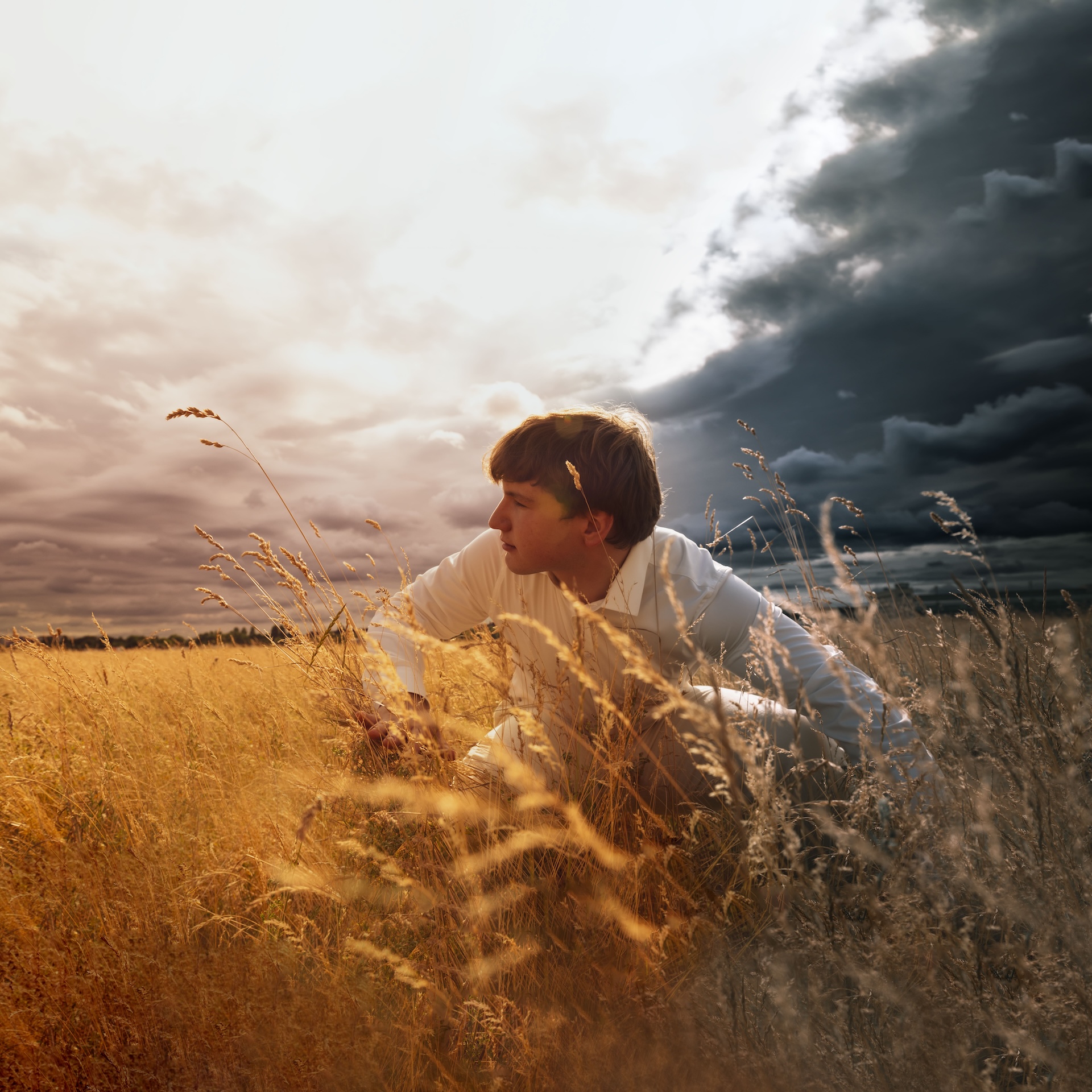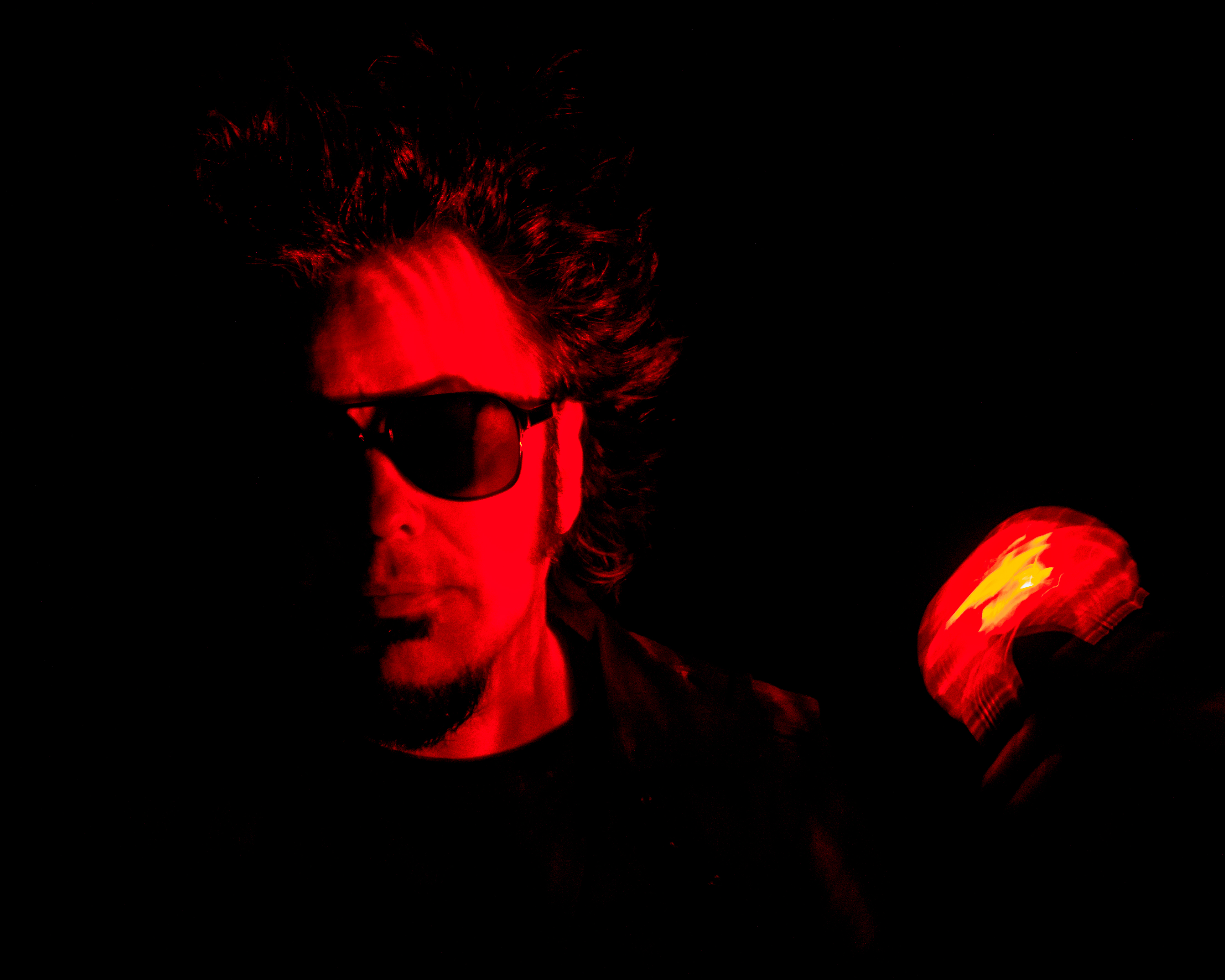
Wolfgang Webb is a Canadian composer, singer-songwriter, and emotional alchemist whose music lives at the intersection of ambient electronics, cinematic orchestration, and emotional vulnerability. Known for crafting deeply immersive soundscapes, Wolfgang draws from classical, experimental, and trip-hop influences to create works that feel both intimate and expansive.
His latest album, THE LOST BOY, is an exploration of emotional wreckage, memory, and time — and the quiet path back to oneself. It asks what gets stripped away when you’ve lost your sense of self, and what remains resilient: the pulse of nature and the rawness of truth.
His work is an invitation into a space where grief, beauty, silence, and survival converge.
With his album, THE LOST BOY, out now, we took some time to hear from Wolfgang Webb. Read below to learn more about Wolfgang Webb, the story behind his latest album, and what’s to come.
Hi! At what point in your life did you decide to pursue a career in music? How did you get started?
I got my start writing music for radio commercials when I was younger. That opened the door for me and my music partner at the time, Tod Cutler, to form a band and release some songs that we were proud of. Eventually, that led to scoring music for a bunch of Canadian TV shows. So yeah — music’s kind of always been there, in some form.
That said, I did take a long break from writing for myself. But then one day, I wrote this song called ‘Before You Sleep (The Pills),’ and it totally changed everything. The process felt raw, honest — like something clicked. Being transparent, especially around mental health, felt necessary, and I just let it pour out. That moment made me realize that the truth that I’d been looking for in music had been there the whole time. It was a huge turning point — and that song ended up becoming the first video-single off The Insomniacs’ Lullaby. You can check it out on YouTube if you’re curious.
Has your upbringing played a role in shaping who you are and defining your sound today? If so, how?
Absolutely — I think everyone’s upbringing plays a huge role in shaping who they are, whether the impact is positive or difficult. Both of my records touch on that in different ways — they each have elements rooted in my own story. Writing them has been a deeply cathartic experience.
From the time that I was born to turning sixteen, we moved maybe six times. It made it hard to feel settled or hold onto early friendships. That kind of instability shaped how I see the world — and, in a way, how I write.
When I moved to Toronto at eighteen, everything changed. I found community there — creative, like-minded people who made me feel understood. That feeling of finally belonging has had a huge influence on my sound and the stories that I tell through music.
How would you describe your sound to readers who may not be familiar with you?
That’s a tough question. But at the core, I aim to create emotionally immersive music—blending atmospheric electronics with cinematic textures, and weaving in elements of trip-hop, ambient, electro acoustic, and orchestral soundscapes. I’m drawn to that palette because it gives me room to explore the full complexity of emotion. There’s beauty in contrast, and those textures let me express both tension and release—musically, lyrically, and vocally.
Do you have any hobbies outside of music? What do you do to stay creative?
I love film, photography, editing, and sound design—they’re all extensions of how I process the world. I’m very much a visual thinker, and when I write music, I often see it first. Sometimes it’s a flicker of light, a certain color, or even a full scene playing out in my mind. That visual spark usually becomes the emotional cue that guides the music. It’s almost like scoring a film that hasn’t been made yet. That’s probably why I’ve made four videos for this record and five for the last one—it’s not just about pairing visuals with sound: it’s about telling the full story. The music, the lyrics, the visuals—they all speak the same emotional language, and bringing them together just feels natural.
Who are some of your main musical influences?
Hmm… that’s always a hard one because it changes depending on the day, but I think that I’m most drawn to artists who aren’t afraid to take risks—who live in the deep end creatively. I adore Gavin Friday… and of course, Bowie—he was like a world unto himself. Michael Stipe too, for his lyrical integrity—there’s a kind of luminous restraint in his writing that I really admire. And speaking of that kind of honesty—Gord Downie, Leonard Cohen, Lou Reed, Patti Smith, Nick Cave… they all have this ability to hold a mirror up to the human condition without flinching.
And then there are the sonic architects—Kruder & Dorfmeister, Martin Tielli, The Knife, Trentemøller, Matthew Dear, Nils Frahm—artists who stretch the boundaries of what sound can feel like. They’ve shaped the way I think about space and texture in music.
And what would the world even be without Tom Waits? Or Mary Margaret O’Hara, who’s like this entire genre of her own. Massive Attack, of course—those textures, that atmosphere. And then there’s LOW… one of my favourite bands. Alan Sparhawk is just… I don’t know, some kind of quiet genius.
What are some of your future music career goals?
Right now, I’m fully immersed in promoting and releasing the four music videos tied to this album. We literally shot the fourth one the day before the release, so all of my energy is still wrapped around THE LOST BOY. I’m committed to giving him the space and attention he deserves—it’s his journey too, and I want to see where it leads. And of course, there’s more music down the road. Always.
What’s one of the proudest moments of your music career so far?
One of the moments that I’m most proud of came after taking a long break from music, uncertain if I’d ever write again. But then, out of nowhere, a song called ‘Before You Sleep (The Pills)’ just manifested. I was going through a difficult time with my mental health and wasn’t in a good place, so it became a real turning point for me. The process of creating it was incredibly raw and honest—everything just clicked. I knew that I had to be fully transparent, so I poured everything into it without holding back. That song made me realize that the truth that I’d been searching for in my music had been within me all along. The melody, the trumpet layers, the cellos—it was all there, fully formed in my mind, and for the first time, it came to life exactly how I envisioned it. It became the first video single from The Insomniacs’ Lullaby. If you get the chance, check it out on YouTube.
What would you say are the greatest lessons that you’ve learned so far?
I’ve learned that vulnerability is key—it’s not always easy, but being open, especially about mental health struggles, has not only helped me heal, but also allowed my music to connect with others. Trusting the process has been another important lesson. I took years away from music, unsure if I’d ever write again, but when the time was right, everything just clicked. I’ve also realized the power of letting go of control in creativity. Some of my most meaningful work has come when I’ve allowed the music to unfold naturally, without forcing it. And, of course, surrounding myself with amazing, beautiful souls has been crucial too.
Now onto your release, THE LOST BOY. What inspired this project?
Lyrically, this album really picked up where The Insomniacs’ Lullaby left off. About three months after wrapping that project, I wrote the demo for ‘march’—which ended up being the first video single off the record on YouTube—and it quietly shaped the path forward. That song kind of cracked something open. It made me realize that I still had work to do—some deep inner child stuff, the kind of work that doesn’t always come easy. That’s where the heart of THE LOST BOY really came from. It explores what gets stripped away when you’ve lost yourself, and what remains resilient: the pulse of nature and the rawness of truth. The title of the album showed up early on, and it just felt right. It held the weight of what I was trying to say.
This incredible journalist, Edith Slocum, recently described the album as ‘a chiaroscuro of grief, resilience, and the quiet triumph of survival.’ I was honestly stunned by how accurately and beautifully she articulated what I was trying to express. It’s rare that someone puts language to your experience in a way that feels that aligned—it meant a lot to me.
How did the music video for “march” come about, and how did the collaboration with Esthero come about? What was your vision for the video?
Esthero and I have been friends for a long time. I was in L.A. just visiting—mainly to drop off a copy of my first record—and somehow, we ended up talking about music. I had a rough mix of a song, but I really wanted her to connect with it, so Bruno Ellingham put some finishing touches on a version with my vocals before I played it for her.
Not only did she connect with it—she completely elevated it. Her verse took the song to another level. Esthero has one of those rare voices that feels angelic, fragile, and at the same time—strong AF. There’s this stunning, dissonant harmony in her ad-libs that gave me goosebumps. Her voice, paired with the lyrics, feels like the sound of wisdom itself. It was the perfect match for the track.
As for the video—I had been planning the visuals from the very beginning. I was constantly sketching pathways, stone angels, castles, ruins. When I started piecing together footage for ‘march,’ I’d often hit creative blocks and bounce over to editing ‘the ride’ video instead. It became this ongoing rhythm— shifting gears, following wherever the energy was.
Eventually, I hit a wall, and that’s when Shauna MacDonald and I teamed up. We ended up collaborating on all four videos. Shauna’s not just a brilliant actor and director—she has this incredible instinct for visual storytelling. She knows how to hold the emotional weight of a lyric and translate it into something that resonates on screen. For her, March became a song of hope—a visual lifeline, a reminder that even in deep isolation, we still belong to something bigger.
Kristjan Viger was also a huge part of it. He filmed the footage of me singing, created the candle flares, and brilliantly came up with the silhouette concept for ‘the ride,’ which added a whole new layer of meaning to that video.
And then there’s my longtime friend, Patrick Tiberius Gehlen—a creative and humble visual genius (and VFX lead on Game of Thrones). He brought the statues to life in such a haunting, breathtaking way.
All these amazing friends brought something unique and essential to these videos.
You have a music video for another song from the album, ‘the ride.’ How did that video come about, and what was the vision for that visual?
Yes, there will be four music videos, but the second one is ‘the ride.’ It’s completely devoid of humans. I play a ghost silhouette in it, but what I really wanted—along with co-creative director Shauna MacDonald—was to let nature’s quiet dominance speak for itself. We focused on places like abandoned amusement parks and forgotten movie theaters—spaces that once pulsed with sound, colour, and movement, now left to fade and be slowly reclaimed by the earth. Where there used to be laughter and lights, now there’s only silence and the slow passage of time.
But in that silence, something profound happens—you begin to see just how resilient nature truly is. It doesn’t force its way back; it simply reclaims, quietly and steadily. That’s the real story for me—the quiet strength of the natural world. It’s a reminder that no matter what we build, abandon, or destroy, the Earth continues to heal, to grow, to persist.
Kristjan Viger, a talented friend of mine, came up with the silhouette concept, and he made the visuals move backward in time within that outline. It just clicked. We immediately knew that I had to be this subtle, ghost-like figure—an ethereal presence woven into the edges of the story rather than standing in the center. Kristjan had created a similar idea for my ‘Before You Sleep (The Pills)’ video from my first record, so this felt like a natural progression of that visual language. It carried forward a sense of continuity, but this time the concept perfectly echoed the themes of ‘the ride.’ It’s a quiet reckoning, a conversation between decay and renewal—one that never needed words.
Who are some of the talented people that contributed to THE LOST BOY?
That’s an amazing question. There were so many beautiful, integral souls who brought their spirit, energy, and talent to THE LOST BOY. Every single one of them helped shape this record into what it became. And just to be clear—this list is in no particular order, because each person played such an essential role.
Three multi-instrumentalists come to mind right away—Yann Marc, Andrew Lauzon, and Derek Downham. All three are absolute virtuosos, yet incredibly humble. Each of them knows how to slip into the emotional pocket of my songs without overplaying—they really listen—to the notes, the silences, and the emotional architecture of the music. That kind of sensitivity is rare.
Larry Salzman is a phenomenal percussionist and drummer who always brings something unconventional to the table, which is exactly what I’m all about. He’s meticulous. He’ll present me with dozens of snares, dozens of shakers, or a million kick sounds, so that I can hear how they sit in the mix before he even lays down the performance. He really cares about the sonic story.
And then there’s the brilliant multi-instrumentalist and cellist, Yann Marc. He performed all over my first album, and that was the moment that I knew that I wanted him on the majority of my compositions going forward. He’s one of the most passionate players that I’ve ever worked with. His gift is in understanding the space between the notes—that quiet tension and restraint—but he also has the ability to unleash an incredible intensity when the moment calls for it. If you want a taste of that duality, just listen to ‘phoenix.’
Unlike my first record, I had the privilege of working with several incredible vocalists this time—Carmen Elle, Esthero, David Ramsden, and Kathryn Rose. Each of them brought something special: distinct vocal timbres, raw emotion, and instinctive takes. Most of their vocals were done in just three or four passes. It was that natural.
Mark Gemini Thwaite brought a drippy-emotional pulse to ‘is it ok to fall?’ Amir Kovalski, who played piano on ‘the ride,’ has the softest, most emotionally intuitive touch that I’ve ever recorded. It’s like he plays from the silence. Kyle Linneman played trumpet on that track and recorded the most unconventional trumpet solo for the song, and Mauricio Miranda added his Rhodes magic to two tracks.
On the mixing side, I was lucky to have John ‘Wheels’ Hurlbut onboard. He’s someone that I’ve worked with since forever, and he mixed half of this record as well as the entire The Insomniacs’ Lullaby. His understanding of nuance, sonic dynamics, and atmosphere is unmatched—and he also mixed four of the tracks in Dolby Atmos, which was such a gift. It gave everything this lush, multi-dimensional quality.
Bruno Ellingham mixed ‘march’ and ‘the ride,’ and really helped elevate the cinematic scope of those songs. His approach to space, texture, and tonal layering brought out the emotional depth of the arrangements that I had recorded—his mixes feel like they breathe, with all the moody undertones intact, but never overdone.
Andrew Lauzon mixed ‘is it ok to fall?’ and ‘in the end’ with such clarity and emotional precision, and Justin Heron tackled an intense version of ‘phoenix,’ which had about a trillion of Yann’s cello tracks stacked on it. Justin brought it all together and got the song exactly where it needed to be. Noah Mintz was the incredible mastering engineer for both of my records.
Visually, I had the dream team. Blatta (@blatta_art) created the stunning digital paintings of the lost boy on the cover and the found man inside. Leanne Paura (aka @leeleemishi)—an amazing DJ and gifted designer—has designed both of my records. Angelina Aristodemo shot the photography and deserves major credit for her patience—she knows that I really don’t like being in front of the camera. And, Florian Nicolle painted my portrait in France.
What message do you hope fans take away from your music and from THE LOST BOY?
THE LOST BOY is about wandering through emotional wreckage, memory, and time—and somehow finding your way through the quiet. It explores what gets stripped away when you’ve lost yourself, and what remains resilient: the pulse of nature and the rawness of truth.
There’s a deep emotional architecture running through many of these songs—whether it’s the ghostly silhouette in a video, the atmospheric space between cello swells, or an unguarded lyric. My hope is that listeners feel like they’re being invited into a space where pain, beauty, grief, and renewal can all coexist.
My record doesn’t offer answers—it offers presence. A quiet reminder that even in disintegration, there’s dignity. Even in silence, there’s strength. And even when we feel lost, we’re still connected to something greater—nature, memory, frequency, and the quiet force of the human spirit.
Where can we follow you on social media?
The links are on my website at wolfgangwebb.com.
You can also find me on the following platforms:
Social Media:
- Instagram: @wolfgangwebb
- X (formerly Twitter): @wolfgangwebb
- Facebook: Wolfgang Webb – Music
- YouTube: Wolfgang Webb Official
Streaming & Music Platforms (all under Wolfgang Webb):
- Bandcamp
- Spotify
- SoundCloud
- Deezer
- Apple Music
- Tidal
Thank you for the great interview; wish you much continued success!