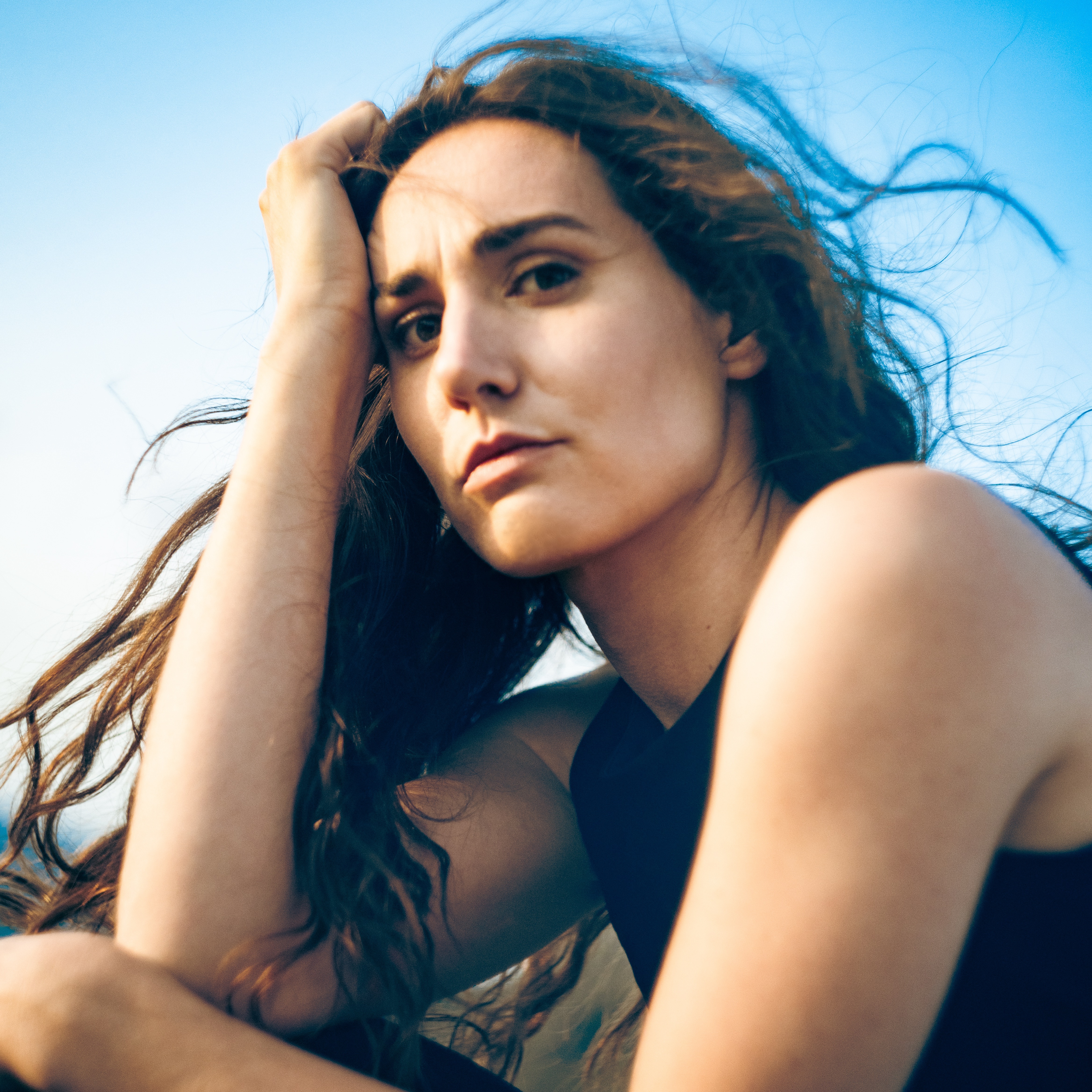

While being raised on a farm in the South-Island of New Zealand, Suze Harper discovered she had a powerful voice and natural instinct for songwriting at a very young age. She is a classically trained vocalist turned jazz, pop and blues-infused singer-songwriter.
Suze Harper was studying for her final year of law school in Paris when she became largely reacquainted with her deep musical instinct and passion for live performance. After performing in Parisian jazz clubs and for people in the street with her guitar, she honed her original sound in London—melding jazz, soul, blues, pop, and classical roots, leaving a career in law behind. Her extensive vocal range, unique tone, evocative lyricism and natural stage wit captivates audiences with real authenticity.
Influenced by an eclectic array of vocalists and musical talent, from the likes of Etta James, Carole King, Joni Mitchell and Leonard Cohen, Harper’s original sound is instinctually melodic without following any kind of musical formula. Her debut single, “Not That Hard,” was released on October 31st, 2025 ahead of the release of her debut four-track EP recorded with Spiritual Records.
With her debut single, “Not That Hard,” out now, we took some time to hear from Suze Harper. Read below to learn more about Suze Harper, the story behind “Not That Hard,” and what’s to come.
Hi Suze Harper! Let’s start with how did you get your artist name?
My full name is Susannah Harper. For some reason people kept mistaking the name Susannah for “Suzanne” or “Susan,” so I decided to make it easier for everyone and go by “Suze,” which is what my mates always called me.
What city are you from, and where are you based now?
Initially, no city! I grew up on a sheep farm in the South Island of New Zealand, about 30 minutes from the nearest village and about 3km from any neighbor. I studied in Wellington, New Zealand before moving to Paris to finish my studies, and then eventually settling in London which is where I’ve been based for the past three years.
At what point in your life did you decide to pursue a career in music? How did you get started?
I’ve been writing and performing music for most of my life. Initially, I was training in classical voice in my teens, but then ended up going to law school and began a career in human rights law before I could no longer ignore the calling to pursue music full-time. I had already been playing live in London and Paris regularly and over a year ago I decided to leap into it fully, and release the music my live audiences had been urging me to put out.
How would you describe your sound to readers who may not be familiar with you?
A little bit jazzy, a little bit poppy, a little bit bluesy and a little bit rocky.
Do you have any hobbies outside of music? What do you do to stay creative?
I’m a bit of a history buff, and I find spending a day in a museum or in historical places particularly inspiring. Artists are typically strong empaths, so revisiting characters of the past and being able to really place yourself inside the time can be an incredibly fueling exercise. That is why I have found living in cities like Paris and London just automatically inspiring, because there is history all around you and countless opportunities to be transported to different times. It’s amazing just walking around the city knowing there are buildings so much older than the existence of a state of New Zealand.
Who are some of your main musical influences?
I always find this question difficult to answer because it’s just so eclectic for me. It ranges from classical composers like Ennio Morricone who wrote The Mission soundtrack, 1960s jazz and blues legends like Ella Fitzgerald, Muddy Waters (and Billie Holiday prior to them), lyrical genius’s like Leonard Cohen, incredible melody makers like Carole King and Joni Mitchell, and those who kept my favorite genres alive in the pop music market like Nora Jones, Amy Winehouse and recently, Olivia Dean.
What’s one of the proudest moments of your music career so far?
There’s no better feeling than stepping off the stage knowing you’ve played a great show, but my proudest moment so far was simply just seeing my first single up on Spotify. Having spent the first 6.5 years out of high school thinking I had to be a successful lawyer to be taken seriously, when I released the first track, it really felt like the first thing
I’d truly done for myself that wasn’t influenced by a perception of external expectation.
What would you say are the greatest lessons that you’ve learned so far?
I’ve been privileged enough to work with some seriously skilled musicians who’ve taken interest in my voice and songwriting and offered some highly valuable input into my projects, but I’ve also learned how important it is to trust your own musical instinct, even
when you feel like you possess a lesser knowledge in music than others. I’m an instinctive writer through and through, and I’m learning to trust that my instincts actually know what they’re doing instead of letting others intellectually dissect a song to make sure it follows certain rules or formulas. On top of that, when you want input on the
general feel and broader potential of your music, the best people to ask are not your musical mates, but just your mates who love music. These people are your most trusted advisors. They’re not listening to your song analysing your chord changes and whether you should consider a slightly different chorus progression, they’re thinking about how it makes them feel, and that is the main metric of what is or isn’t a good song.
Now onto your release, “Not That Hard.” What inspired this song? What is “Not That Hard” about?
I was living in Paris at the time, supposedly the most romantic city in the world yet stuck in a particularly unromantic relationship with another musician. It was one of those “in theory, we’re in love” situations yet I was running out of ways to tell this person that it
didn’t really feel like it. I turned to song, and in a way it took the form of a kind of musical instruction manual with the overarching principal being that it really isn’t that hard. After that particular period ended, and you can look back and laugh at your own naivety a little bit, I still maintain the principal that loving someone, whether it be a lover, a friend, your children or even perhaps yourself, just shouldn’t be that hard.
What was the inspiration behind the cover artwork for “Not That Hard?”
The photo was taken on my most recent trip to Paris. I just wanted it to be simple and without false glitz or glamour. Just how a decent relationship should be. I’m just a farmer’s daughter after all, simple and organic is how I was raised and it’s how I’ll always represent myself.
What was the creative process like when making “Not That Hard?”
The ultimate way to process what my gut already knew. By the time I’d finished the song, I understood the reality of my own situation, and as I came to find the direction of the song, I also came to find the direction that I needed to take with my own choices. You pick the guitar up feeling all sad and mopey, and then that lovely dopamine rush you get upon finishing something you know is good work is what gives you the confidence to finish whatever it is that’s holding you back.
How long did it take to complete “Not That Hard?”
It was one of those rare gems where music and lyrics happen all at once in a thirty minute burst of inspiration.
What is your favorite lyric in “Not That Hard” and why?
“I don’t need a boulevard – It’s not that hard.” That line was inspired when I was told a story of a French king fashioning a boulevard out at Versailles to express his grand love for a woman. In saying “I don’t need a boulevard,” I’m simply saying that I don’t need or expect grand gestures, I don’t care for frivolities and all I’m really asking for is just really not that hard. I like that it’s a line that generates curiosity from my listeners.
What message or messages do you hope fans take away from “Not That Hard” and your music in general?
The simple message derivable from “Not That Hard” is akin to the way that I want people to feel about me through my music and message as an artist. It should be simple, honest and sincere. I’m just a basic, rural raised girl who who loves music and sharing my energy with others this way, and despite my tendency to overcomplicate things in my mind, simple and honest principles are what drive me and my choices. I won’t be dancing around in bejeweled leotards and putting on grand spectacles to draw attention to my music, I’ll be sharing myself and my music simply, honestly and sincerely (most likely in my jeans).
What’s next for you? Are you working on any upcoming projects, or do you have any upcoming shows that we should be on the lookout for?
My second single, “Anthony,” which is about my ongoing relationship with the patron saint of lost things – Saint Anthony, is out on the 5th of December, and a full EP will be released in January 2026. Following that, I’ll be performing a headline show in London at The Pheasantry, Chelsea on 18 February 2026. Right now, I’m currently back in New Zealand for the summer and writing a bunch of new songs that I hope to start turning into an album next year.
Where can we follow you on social media?
Instagram: https://www.instagram.com/suzeharperr
Newly started TikTok: https://www.tiktok.com/@suzeharperr
YouTube: www.youtube.com/@SuzeHarper
Website: https://www.suzeharper.com
Thank you for the great interview; wish you much continued success!