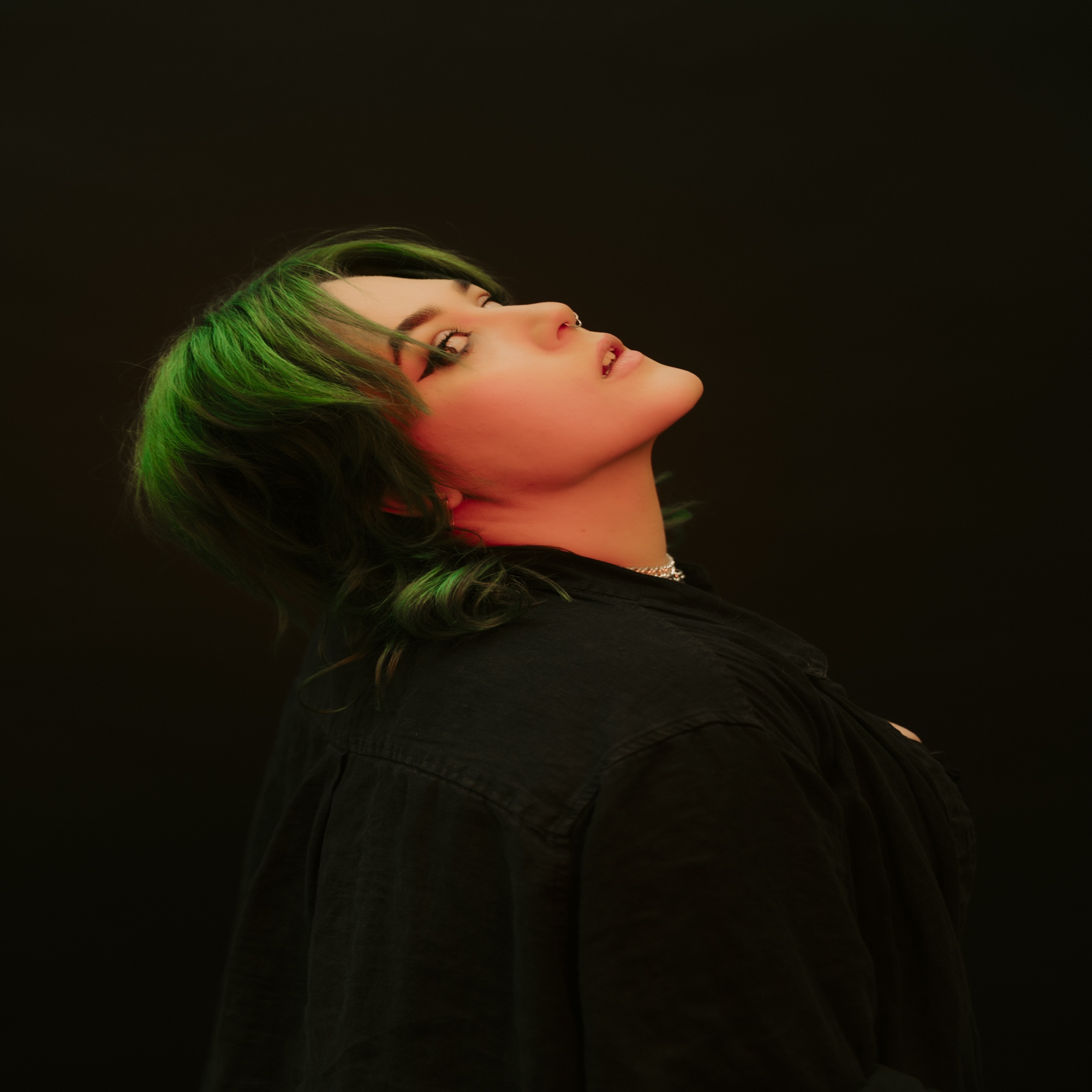
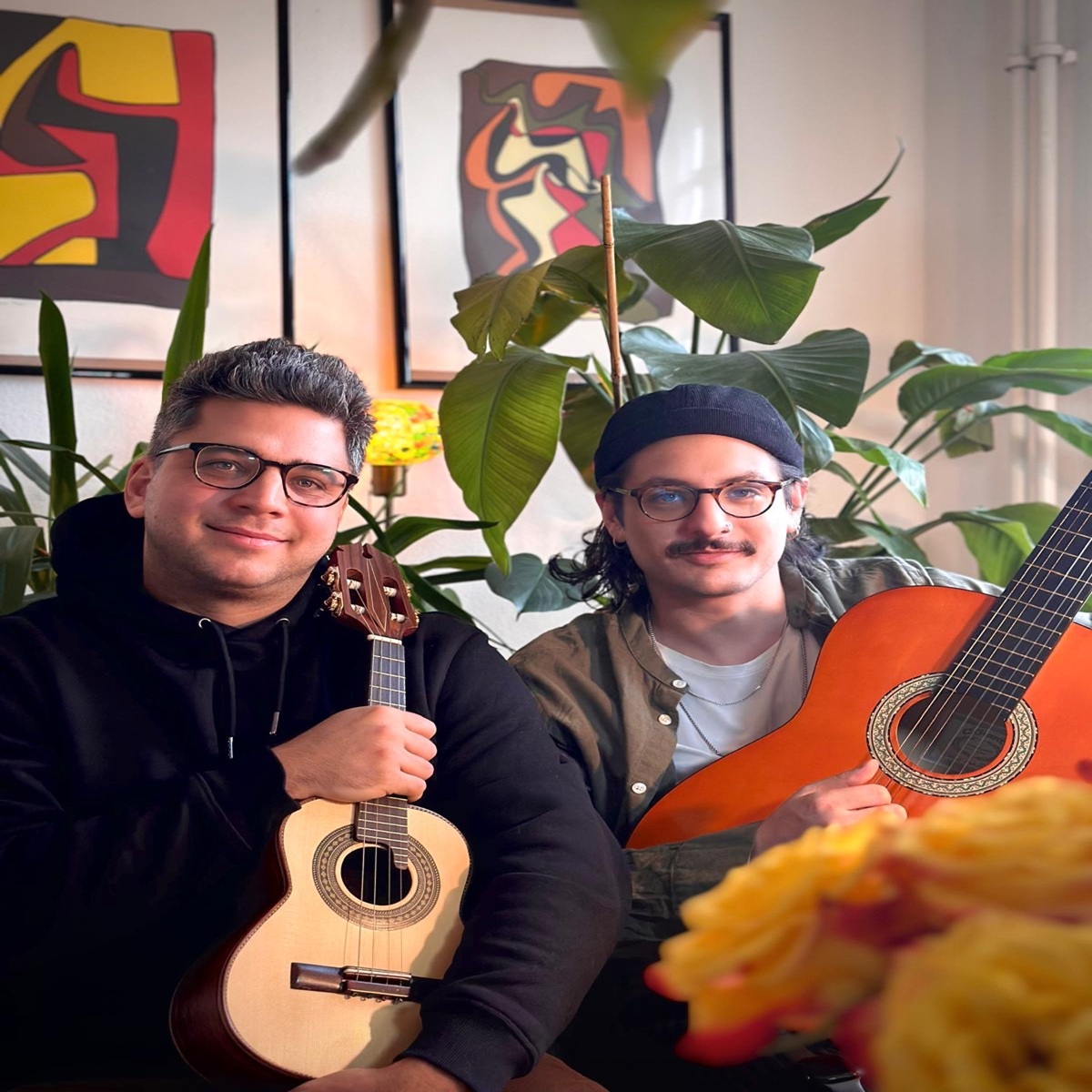
Sometimes Julie, one of San Diego’s most engaging and original indie bands, is the musical brainchild of singer-songwriter duo Monica Sorenson and Rick Walker.
Walker, former lead guitarist for Chicago’s Greeley, is a multi-instrumentalist who reveals his rock and roll prowess as he defines Sometimes Julie’s unique sound. Sorenson paints the pictures, finds the words, tells the stories, and delivers the melodies with her piano and powerful voice. Walker is the theory, the rhythm, the science, the skill, and Sorenson is the front woman who is all heart and art.
The duo first emerged in 2014 with their award-winning 2014 debut CD, Head First, which was followed up by Bright Side of the Line (2016), Breaking (2018), Where Are You? (2020 – San Diego Music Award nominee), and Seven Wishes (2023).
Sometimes Julie is now thrilled to announce the release of their new six-song EP, entitled Transition, which dropped on all music streaming platforms on December 30, 2025.
While Sometimes Julie’s five previous albums were all steeped in the band’s classic and alternative rock roots, the songs on Transition are more intimate and reflective in nature. While Transition falls squarely in the indie singer-songwriter realm, the duo’s soulful rock, pop, and country influences remain intact and are clearly evident.
With some of her most personal and revealing lyrics to date, Transition displays Sorenson’s strong desire to connect with the listener through the exploration of universal concepts such as love, loss, and the struggle for authenticity. In pursuit of that connection, she is unafraid to wear her heart on her sleeve.
With Transition out now, we took some time to hear from Sometimes Julie. Read below to learn more about Sometimes Julie, the story behind Transition, and what’s to come.
Hi! Let’s start with how did the band’s name come about?
It’s a bit of a secret identity story, actually. Back when I first started playing open mics and hitting the local dive bars, I wasn’t quite ready to merge my music life with my ‘real’ life. I wanted a persona I could hide behind a little bit, so I started introducing myself as Julie. It was my go-to “Starbucks name”—easy, anonymous, and just different enough from my daily self.
When I first met Rick in 2012, I introduced myself as Julie. We spent months collaborating and writing our first songs together, and the whole time, he genuinely thought that was my name. Eventually, the truth “accidentally” slipped out that I was actually Monica. Rick thought the whole mix-up was hilarious. He started jokingly calling me “Sometimes Julie,” and it just clicked. We realized it was the perfect name for the band because it represents that duality we all have. There’s the person I am in my day-to-day life, and then there’s “Julie”—the version of me that’s fearless, authentic, and completely free once I step into the spotlight.
What city are you all from, and where are you all based now?
We’re based in San Diego now, but our sound is really a collision of two very different musical geographies. My background is rooted in the high-altitude quiet of Colorado mountain towns and the wide-open landscapes of Phoenix and Denver. Growing up in those environments, you develop a certain appreciation for space and storytelling—there’s an intimacy to the music there that stays with you. When I moved to San Diego as a young adult, I brought that more internal, songwriter perspective with me.
Rick is the counterweight to that. He was born and raised in the Chicago rock scene, which has a completely different DNA. It’s a culture built on authenticity, a strong work ethic, and that classic, driving energy you only find in the Midwest. He’s also spent time in Houston and here in San Diego, so he’s got a sense of groove and polish that balances out my more rugged, mountain-town roots. In the end, “Sometimes Julie” is what happens when you take that isolated, high-country sensibility and plug it into a Chicago rock foundation.
How and when did the band form?
Rick and I met in 2012. Neither of us were looking to start a band. I was perfectly content hiding behind my pseudonym and singing other people’s songs, and Rick was busy recording some of his back catalog in his home studio. But Rick has this incredible ear for potential, and after we’d been hanging out for a while, he didn’t just want to play together—he challenged me to start writing.
I remember the moment everything shifted: I showed him some lyrics I’d been sitting on, feeling completely exposed because I was finally dropping the “cover girl” act. Instead of just nodding, Rick immediately started hearing the arrangements—the Chicago grit meeting my mountain-town lyrics. That was the “Aha!” moment. We realized we weren’t just two people jamming; we were a songwriting team. The band officially formed the second we stopped trying to sound like our influences and started trying to sound like “us.”
How would you all describe your band’s sound to readers who may not be familiar with you all?
We have a very clear sense of our sound—it’s more that we like to play with the volume and the emphasis depending on the story we’re telling. We aren’t changing our identity; we’re just turning different dials. At the core, our music is a collision between Rick’s Chicago rock background and my roots in mountain-town storytelling. Rick provides the “engine”—that technical, driving, Midwest rock proficiency—and I provide the “narrative.”
On our earlier records, like Breaking, we had the volume turned all the way up. We leaned into the big, soaring guitars and that heavy-hitting energy. With our latest project, Transition, we haven’t changed who we are; we’ve just shifted the emphasis toward intimacy. We’re exploring more cinematic textures and leaving more space between the notes, but the underlying rock foundation is still there. I’d describe us as Alternative Rock with a storyteller’s soul. Whether it’s a roar or a whisper, the spirit is the same.
Who are some of your group’s main musical influences?
For me, the foundation of our music has always been these incredible women who are, first and foremost, master writers. I’ve always been drawn to artists who command a stage with both power and restraint. On the rock side, I’ve got the “queens”—Ann Wilson for that incredible range and Chrissie Hynde for her effortless attitude. But I’ve studied them as much for their pens as for their voices.
I grew up on the grounded honesty of Carole King, the pop-rock sensibility of Sheryl Crow, and the poetic, almost cinematic approach of Natalie Merchant. I’m even inspired by what someone like Billie Eilish is doing today; she’s a brilliant writer who uses intimacy and ‘the space between the notes’ to create something really haunting.
Rick is the counterweight to all of that. Coming out of the Midwest, he’s heavily influenced by a blue collar, “working-man’s rock” ethos — music with big, driving, anthemic energy. Think Springsteen, Mellencamp, Cheap Trick, and the like.
When you put my focus on the craft of the song together with Rick’s drive for that big foundation, that’s where the magic happens.
What’s one of the proudest moments of your group’s music career so far?
Rocking the Belly Up, one of the premiere music venuesin our hometown of San Diego—not just once, but twice—was a massive milestone for us, and we’re already looking forward to getting back on that stage soon. Other San Diego venues we’ve also had the honor of playing include the Music Box several times, the House of Blues and other iconic venues like The Casbah and Soda Bar. We also love the local, high-energy spots like Pour House and 1st Street Bar, where the crowd knows us and cheers us on.
But if you’re asking about the moments that hit the hardest emotionally, opening the PanCan run here in San Diego stands out. We were doing something deeply meaningful for some very dear friends of ours, and looking out at that crowd was powerful. It wasn’t just a gig; it was about using our music to support a cause that hit close to home – finding a cure for pancreatic cancer. It’s that balance of the big stages, the meaningful community moments, and the local spots where we can really connect that makes this all worth it.
What would you all say are the greatest lessons that you’ve all learned so far?
One of the most profound lessons that I’ve learned is that artistic growth is rarely a solitary pursuit; it’s rooted in the value of collaboration. I used to believe I needed to maintain total creative control, but through my partnership with Rick, I’ve realized that the most compelling work emerges from the friction between our different perspectives. Beyond the music, you learn an “easy come, easy go” mentality—you have to live in the moment and celebrate the wins without letting the setbacks get under your skin.
On a practical note, always bring an extra guitar – even if your strings are brand new. But the most important lesson—the one that really defines us—is that you have to perform like everyone is listening. Even when there are only three people in the room, it’s midnight on a Thursday, and you know you have to be at work the next morning, if you aren’t giving those three people the same energy you’d give a sold-out theater, you aren’t being authentic to your craft. There’s no such thing as a small show.
Now onto Transition. What inspired this EP?
The inspiration for Transition really came from a place of necessity. I found myself navigating a chapter of significant love and loss in my life, and I had to dig deep to find the light again. In a lot of ways, I was playing my way back to my own sense of who I am. I wanted these songs to share a genuine sense of hope—not the easy kind, but the kind you earn. What kept me inspired throughout that process was the incredible time and energy the band and our collaborators were willing to invest; seeing their dedication to my stories moved me to push even further.
What is the overall theme of Transition?
Transition is really about the “in-between.” It’s that messy, often quiet space you inhabit when you’re leaving one version of yourself behind but haven’t quite arrived at the next one. It’s about the resilience required to stay present in that uncertainty. We wanted the music to reflect that—moving from tension to resolution—and finding the beauty in the shift itself.
What was the inspiration behind the cover artwork for Transition?
I’m so glad you asked about that. The cover is actually a photograph taken by my son, Andrew, while he was in college. I’ve always been moved by his eye for detail and the way he captures a moment, and this particular shot just felt like the visual heartbeat of the music. Using it was my way of paying tribute to his art and bringing a piece of my family into the soul of the project. It makes the whole EP feel that much more personal.
What was the creative process like when making Transition?
Exhausting is a good word for it, but I loved every second of it. Because we were shifting our sound toward something more cinematic and intimate, the process was about stripping things away until we found the core. It was a marathon of refining and rethinking, but that’s what made it so rewarding despite it feeling uncomfortable at times. By the time we finished, the music didn’t just sound like us—it felt like it had grown up with us.
How long did it take to complete Transition?
Transition was a slow burn. We spent two years on the recording process, but the songs themselves had been evolving long before we ever hit the record button. In fact, I recorded the first demos for a few of the songs as long ago as 2021.
Is there a specific song on Transition that speaks to you all the most? If so, why?
If you ask me on a different day, I might give you a different answer, but most days the song that sits closest to me is “I Dreamed of You.” It’s about my son, Andrew, and it’s easily the most raw piece on the album. Usually, I spend a lot of time refining lyrics, but with this one, I didn’t “write” it so much as it just came out of me. It’s the song that’s running on repeat in my heart. The other one I have to mention is “Finally The Rain.” It is a song of pure relief and acknowledging a chance to move forward. It’s about the moment when tension finally breaks.
What message or messages do you all hope fans take away from Transition and your band’s music in general?
I want people to hear Transition and think, “Yes—I’ve been there.” We all go through these stages and shifts, whether it’s changing relationships, a new self-awareness, or a better understanding of our own talents and challenges. Ultimately, it’s about our identities. We are all here for the first time, just trying to figure it out. We need to celebrate and support each other every step of the way. The message is mostly about grace and love.
What’s next for you all? Are you all working on any upcoming projects, or do you all have any upcoming shows that we should be on the lookout for?
We aren’t slowing down! We have two new recording projects already in the works, and we’re going to be singing our hearts out all over San Diego—from East County to Imperial Beach, Oceanside, and back here to Encinitas and Carlsbad.
We love the San Diego music community. One of our favorite things is showing up at shows and meeting other cool local bands. We love collaborating with other local bands like Crescent Blue and playing venues like Winston’s or Navajo LIVE. It’s about being part of the collective sound of this city. And for the collectors: vinyl is officially on the way. Vinyl is just cool, and it’s the perfect way to experience this album.
Where can we follow you all on social media?
Website: https://sometimesjulie.com
Instagram: http://instagram.com/sometimesjuliesd
Facebook: http://facebook.com/sometimesjulie
YouTube: https://www.youtube.com/@SometimesJulie
Spotify: https://open.spotify.com/playlist/30tcGosZJZurr95f3uVCDS
Apple Music: https://music.apple.com/us/album/transition-ep/1862317841
YouTube: https://www.youtube.com/playlist?list=PLDX6ocb3-0FjjEXkh7cGBH8m0RmstUTcY
Amazon Music: https://music.amazon.com/albums/B0G881FX83
Pandora: https://www.pandora.com/artist/sometimes-julie/transition/ALwjhVVbktb2X3q
SoundCloud: https://soundcloud.com/sometimesjulie/sets/transition
Bandcamp: https://sometimesjulie.bandcamp.com/album/transition
Tidal: https://tidal.com/album/482804591
Thank you all for the great interview; wish you all much continued success!