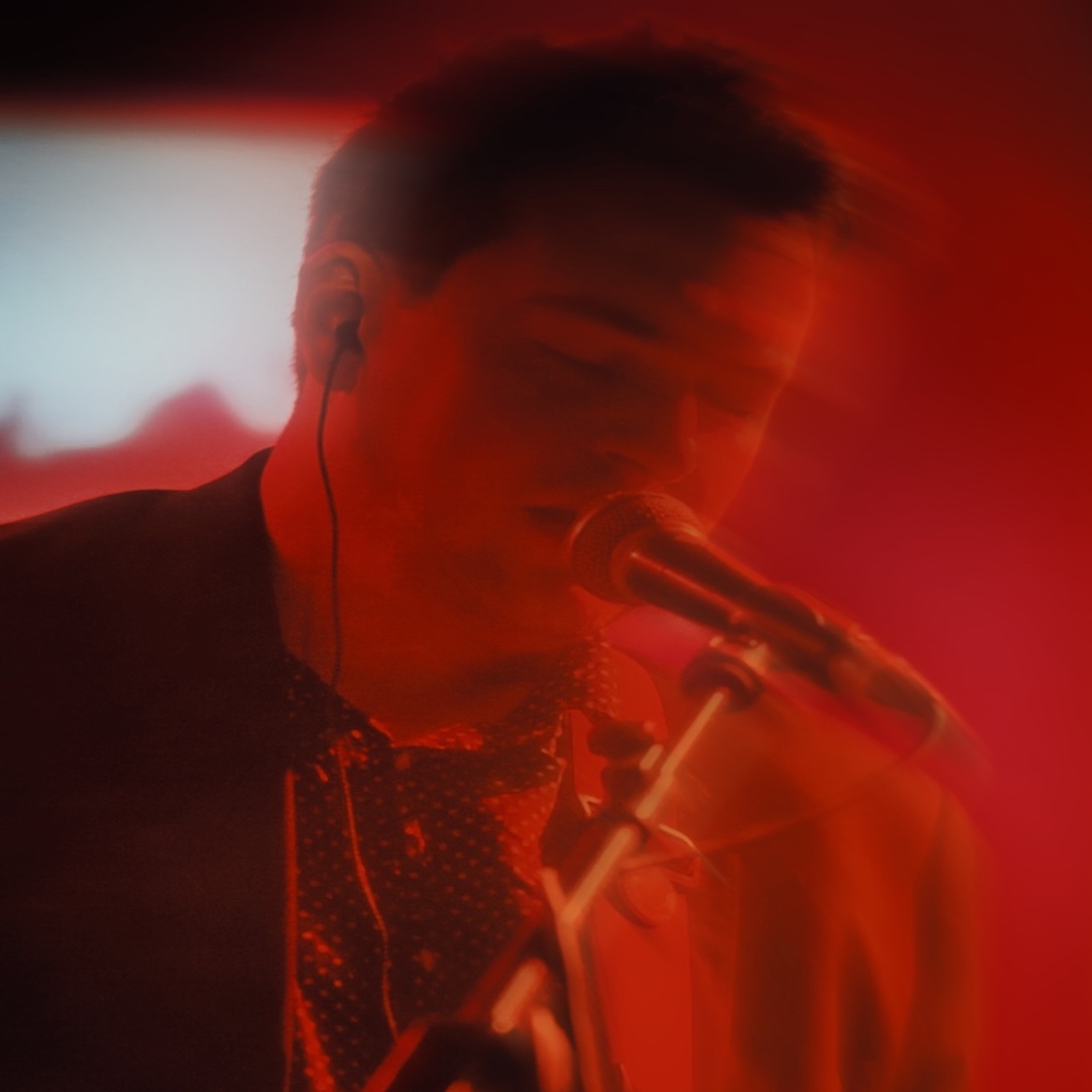
With “Runaway (Late Night Reverb)” out now, we took some time to hear from Ryan McDavid. Read below to learn more about Ryan McDavid, the story behind “Runaway (Late Night Reverb),” and what’s to come.
Hi Ryan McDavid! Let’s start with how did you get your artist name?
The name Ryan McDavid is built on heritage and legacy. It’s a name that carries a lot of weight for me personally, and using it felt like the only honest way to step into this new chapter. For years, I was the guy in the background playing bass, playing guitar, and helping build other people’s visions in various bands. I’m a “band guy” at heart and I always will be, there’s an energy in a room full of musicians that you can’t replicate. But, I eventually realized that if I wanted to explore sounds like darkwave and cinematic indie, sounds that aren’t always the “safe” bet in the local scene, I had to take the wheel. The solo name isn’t about being alone, it’s about being the anchor. It’s the vision that stays stable even when band dynamics shift. It’s my way of ensuring the music survives, no matter what.
What city are you from, and where are you based now?
I’m from Georgetown, Guyana, and I’m currently based here as well.
At what point in your life did you decide to pursue a career in music? How did you get started?
I was always the guy in school making playlists and introducing friends to new sounds. A family member noticed my passion and asked why I didn’t play music myself. That idea grew in my mind until I finally saved up for a guitar. Before I could even play it properly, I was already trying to use it to write original songs. I’ve been pursuing it since school, but I’ve been operating as a solo artist for a handful of years now.
How would you describe your sound to readers who may not be familiar with you?
I don’t fit into a single box. My sound lives in the spaces between indie rock, darkwave, and shoegaze. The main thing that ties it together is honesty. I don’t release a track unless I’m personally addicted to it and feeling a real emotion from it. I want to translate real pain or melancholy into something cinematic that the listener can actually feel.
Do you have any hobbies outside of music? What do you do to stay creative?
I’m an introvert, so I spend most of my time at home with my three senior dogs. There is a purity and honesty in them that keeps me grounded. I also value time with my mother; I’ll sit and watch a predictable Hallmark movie with her just to be present. I’m also constantly researching and trying to figure out “this life thing.”
Who are some of your main musical influences?
My taste has evolved from punk rock to post-punk and darkwave. I grew up on Joy Division, Blink-182, and The Ramones, then moved into The Killers and Radiohead. Recently, I’ve been influenced by artists like Mareux and Artemas. For “Runaway (Late Night Reverb),” I took a lot of inspiration from the atmosphere of Kavinsky’s “Nightcall.”
If you could collaborate with any artist, dead or alive, who would it be?
Ian Curtis of Joy Division. As a Life Path 9, I’m drawn to that kind of raw, humanitarian honesty. The way he could capture isolation and turn it into something universal is exactly what I aim to do.
What’s one of the proudest moments of your music career so far?
Previously when I was in a band with one of my friends, we decided to take a flight out randomly to California to try and make it. We used a service called couch surfing combined with hostels and played open mics in Long Beach, San Diego, LA, and San Francisco and then traveled to Florida and did a few in Orlando and Miami.
What would you say are the greatest lessons that you’ve learned so far?
I think in music you just have to keep getting up over and over. You fail constantly, but you have to keep showing up because if you don’t, you’ll find yourself always waiting on other people to move for you. You have to learn to go without any applause for a long time. Trying to make it as an independent artist is isolating; it’s hard to maintain friendships or relationships because people don’t always understand the obsession. They might think you’re crazy for continuing to push when they don’t see immediate success, but you have to be okay with that silence while you’re building your vision.
Now onto your release, “Runaway (Late Night Reverb).” What inspired this song?
I love the original runaway song; however, I really wanted a version to really hit those late night emotions whether on the drive home or late night can’t sleep and up reflecting, and I really wanted to bring this feeling out more with this slowed version. Slowing it builds nostalgia too.
What was the inspiration behind the cover artwork for “Runaway (Late Night Reverb)?”
The cover shows a couple holding hands, but the figure representing me is blurring out, almost like he’s screaming or fading away. That contrast is the whole point of the song. The lyrics are me warning the person I love to leave before I drag them down with me. The art shows that tension, we’re still connected physically, but the chaos is already tearing one of us apart. I wanted it to look raw and imperfect.
What was the creative process like when making “Runaway (Late Night Reverb)?”
I wanted to create a version of “Runaway” that felt more atmospheric, something suited for those late-night drives or those 2 A.M. moments when you’re completely lost in your thoughts. I worked closely with my engineer, Ray Nizam, who has been a key part of all my projects. He understands my vision intuitively, and he shaped the mix to ensure it carried the exact emotional weight and depth I was looking for. It wasn’t just about slowing it down, it was about building a specific mood.
How long did it take to complete “Runaway (Late Night Reverb)?”
The idea for this version actually came about shortly after the original was finished. However, Ray and I weren’t interested in just putting out a quick edit. He worked through several different versions, fine tuning the atmosphere and the textures until we both felt it was perfect. It took about a month or two of back and forth to get the mood exactly where it needed to be, but we didn’t want to settle for anything less than that.
What do you hope fans take away from “Runaway (Late Night Reverb)” and your music in general?
Ultimately, I just want the listener to feel something. My hope is that it helps people feel less alone in their own experiences. If someone finds themselves in a similar situation and feels the weight of it, I want them to be able to turn to this song for comfort, to know that someone else has been there and that they don’t have to carry that situation entirely on their own.
What’s next for you? Are you working on any upcoming projects, or do you have any upcoming shows that we should be on the lookout for?
I have several tracks in progress right now, each exploring a different sonic direction. I’m not in a rush to put things out, I’m waiting for the moment when a specific song feels right to lead the next chapter. It’s all about the timing and ensuring that whatever I release next carries the same honesty as “Runaway (Late Night Reverb).”
Where can we follow you on social media?
You can find my music and all updates in one place here:
Linktree: https://linktr.ee/ryanmcdavid
Instagram: https://www.instagram.com/helloturtlemac
TikTok: https://www.tiktok.com/@helloturtlemac
Thank you for the great interview; wish you much continued success!