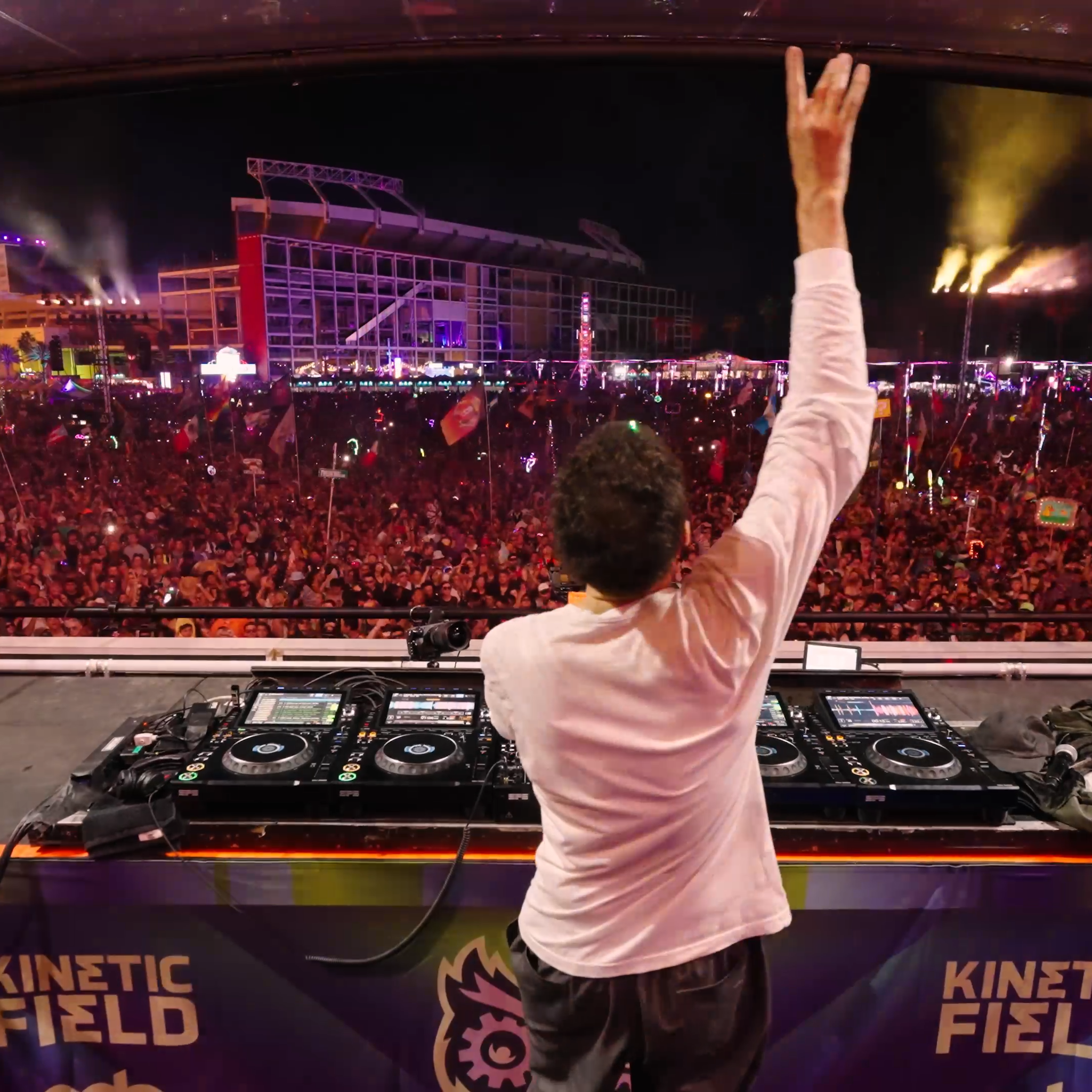

Owens Huang (OHNomad) began his musical journey during the COVID-19 shutdown in 2020. In his youth, adventurous backpacking trips through countries such as India and Tibet profoundly shaped his musical expression and life philosophy. These explorations infused his compositions with introspective themes and a distinctive blend of Eastern artistic elements, seamlessly interwoven with classical, jazz, and metal influences.
Drawing inspiration from his role as a hedge fund manager, OHNomad engages with the dynamic realms of finance and global events, transforming them into creative works that weave together themes of Asian history, culture, philosophy, geopolitics, and market dynamics. In 2023, he premiered his first sonata, Place of Origins, at Taiwan’s National Recital Hall. In 2024, he debuted The Silicon Island in Taiwan, followed by Universal Connection in Mountain View, California. In 2025, he spoke at the CLSA Japan Forum and hosted his first concert in Tokyo. To date, OHNomad has published eighteen works on major music streaming platforms.
Living in the San Francisco Bay Area, he is actively involved in the artistic, technology, and financial communities and serves on the board of the American Composers Forum. Guided by a vision of connection, he seeks to bridge science, technology, and global finance through artistic expression, using music as a catalyst for dialogue, reflection, and unity.
With A Fund Manager out now, we took some time to hear from OHNomad. Read below to learn more about OHNomad, the story behind A Fund Manager, and what’s to come.
Hi OHNomad! Let’s start with how did you choose your stage name?
OH comes from my initials, Owens Huang, while Nomad represents my curiosity and desire to explore the world without being confined by conventional boundaries. When I was younger, I backpacked through India, Tibet, and other countries. Those journeys exposed me to different cultures, philosophies, and ways of understanding life. I think that nomadic spirit has stayed with me. Today, rather than traveling only geographically, I travel intellectually—between finance, technology, history, philosophy, and music. OHNomad reflects that identity: someone who is always exploring, questioning, and searching for new perspectives.
What city are you from, and where are you based now?
I was born and raised in Taiwan, and I’m now based in the San Francisco Bay Area, California. Living in Silicon Valley has been particularly inspiring because it brings together technology, entrepreneurship, creativity, and people from diverse cultural backgrounds. These environments have profoundly influenced both my investment philosophy and musical compositions.
At what point in your life did you decide to pursue a career in music? How did you get started?
My musical journey began rather unexpectedly during the COVID-19 shutdown in 2020. At that time, I was already working full-time as a hedge fund manager, without any formal education in music composition. I started practicing piano again and became increasingly fascinated by music theory. I eventually decided to learn composition from scratch. Rather than following a traditional conservatory path, I studied independently and gradually worked with professional composers and musicians to develop my technical foundation. My background in finance actually helped a lot. Investment research requires discipline, intellectual curiosity, and the ability to learn unfamiliar subjects independently. I still consider myself a fund manager and composer simultaneously. Rather than choosing between these two professions, I’ve discovered that each enriches the other.
How would you describe your sound?
I would describe my music as a fusion of Eastern philosophical sensibilities, contemporary classical music, minimalism, and occasionally jazz. My compositions tend to be conceptual and narrative-driven. Instead of beginning with a particular genre, I usually start with an idea, historical event, or philosophical question that I want to explore. I enjoy subtle harmonic changes, unconventional tonalities, and musical structures that gradually develop into something unexpected. For example, The Silicon Island tells the story of Taiwan’s 400-year history, while The Awakening explores consciousness and different perceptions of reality. With A Fund Manager, I ventured into jazz for the first time, collaborating with pianist Leon Hsu to translate investment psychology into solo piano music.
I don’t want OHNomad to be defined by any single genre. To me, music is a language for exploring ideas, and different musical traditions offer different ways to tell those stories.
Who are some of your main musical influences?
My musical influences are quite diverse, and some might seem contradictory.
I admire the structural complexity and emotional intensity of progressive metal, particularly Dream Theater. Their album, Metropolis Pt. 2: Scenes from a Memory, had a significant influence on how I think about musical storytelling. In classical music, Debussy and Ravel has been particularly important to my relationship with piano, especially through Krystian Zimerman’s interpretations of the Ballades.
I’m also fascinated by minimalism, contemporary classical music, and the improvisational freedom of jazz. Beyond individual musicians, some of my deepest influences actually come from outside music—Eastern philosophy, history, science, and my travels through India and Tibet. I believe creative originality often emerges when we connect ideas that don’t initially seem related.
Do you have any hobbies outside of music? What do you do to stay creative?
Travel has always been one of my greatest passions, particularly exploring unfamiliar cultures and places that challenge my existing worldview. I’m also deeply interested in science, technology, philosophy, and global affairs. My professional work in investment management constantly exposes me to new technological developments and ideas.
For me, creativity isn’t something I can simply turn on when sitting at the piano. It often emerges unexpectedly while reading, traveling, studying a company, or reflecting on a philosophical question. I believe the best way to remain creative is to stay intellectually curious. Sometimes, the most interesting musical idea comes from a subject that appears to have absolutely nothing to do with music.
What’s one of the proudest moments of your music career so far?
One of my proudest moments was hearing my first sonata, Place of Origins, performed at Taiwan’s National Concert Hall in 2023. Just three years earlier, I began learning composition from scratch during the pandemic. Seeing my music performed professionally in such a prestigious venue was an extraordinary experience.
But ultimately, the most rewarding moments aren’t necessarily awards. They’re when listeners tell me that a composition made them reflect on their own experiences or touched them emotionally. That’s when I feel music has achieved something truly meaningful.
What would you say are the greatest lessons that you’ve learned so far?
Perhaps the greatest lesson is that our previous experiences, no matter how valuable, can also become intellectual limitations.
I began composing relatively late in life, without formal musical training. Initially, that seemed like a disadvantage. But I gradually realized that coming from outside the traditional music industry also gave me a different perspective and creative freedom. In finance, I’ve learned that following the consensus rarely leads to extraordinary discoveries. The same applies to music composition.
If you could go back to 2020, when you first started composing, what advice would you give yourself?
I would probably tell myself not to worry too much about starting late.
But I eventually discovered that the experiences I had accumulated outside music were not disadvantages. They were actually the foundation of my artistic identity. I would encourage my younger self to remain curious, learn from as many disciplines as possible, and not feel pressured to follow a conventional path.
There’s a wonderful freedom in discovering something new later in life. You approach it with the perspective of everything you’ve already experienced. And perhaps most importantly, I’d remind myself to enjoy the process rather than focus exclusively on the destination.
Now onto A Fund Manager. What inspired this EP?
A Fund Manager is probably my most personal project so far because it draws directly from my professional life. I’ve spent much of my life studying financial markets, identifying investment opportunities, and making decisions under uncertainty.
What fascinates me is that financial markets aren’t simply about numbers. They reflect collective human emotions—fear, greed, optimism, doubt, and our constantly changing expectations about the future. Over the years, I’ve realized that many investment principles also contain deeper philosophical meanings. For example, being a contrarian isn’t simply about buying unpopular stocks. It’s about the courage to think independently. Similarly, staying neutral isn’t about having no opinion. It’s about maintaining emotional balance even when the world around you becomes chaotic.
I wanted to transform these experiences into music rather than explain them through another investment essay. Jazz felt like a natural choice because improvisation, much like investing, requires both conviction and the flexibility to respond to unexpected developments.
What is the overall theme of A Fund Manager?
The central theme is investment philosophy. Ultimately, the EP isn’t really about money. It’s about how we make decisions, navigate uncertainty, and maintain our independence of thought. The EP consists of four solo jazz piano tracks, each reflecting a different dimension of investment psychology.
“Contrarian” explores the courage and loneliness of standing apart from the crowd.
“This Time Is Different” examines the tension between recognizing genuine innovation and becoming captivated by speculative enthusiasm.
“Stay Neutral” draws from Zen philosophy, exploring the ability to maintain clarity and composure amid fear and excitement.
Finally, “Stay Neutral Stay Longer” revisits that idea through an extended improvisation, emphasizing patience and the importance of allowing ideas to develop naturally.
Although these titles come from the language of finance, their underlying themes are universal.
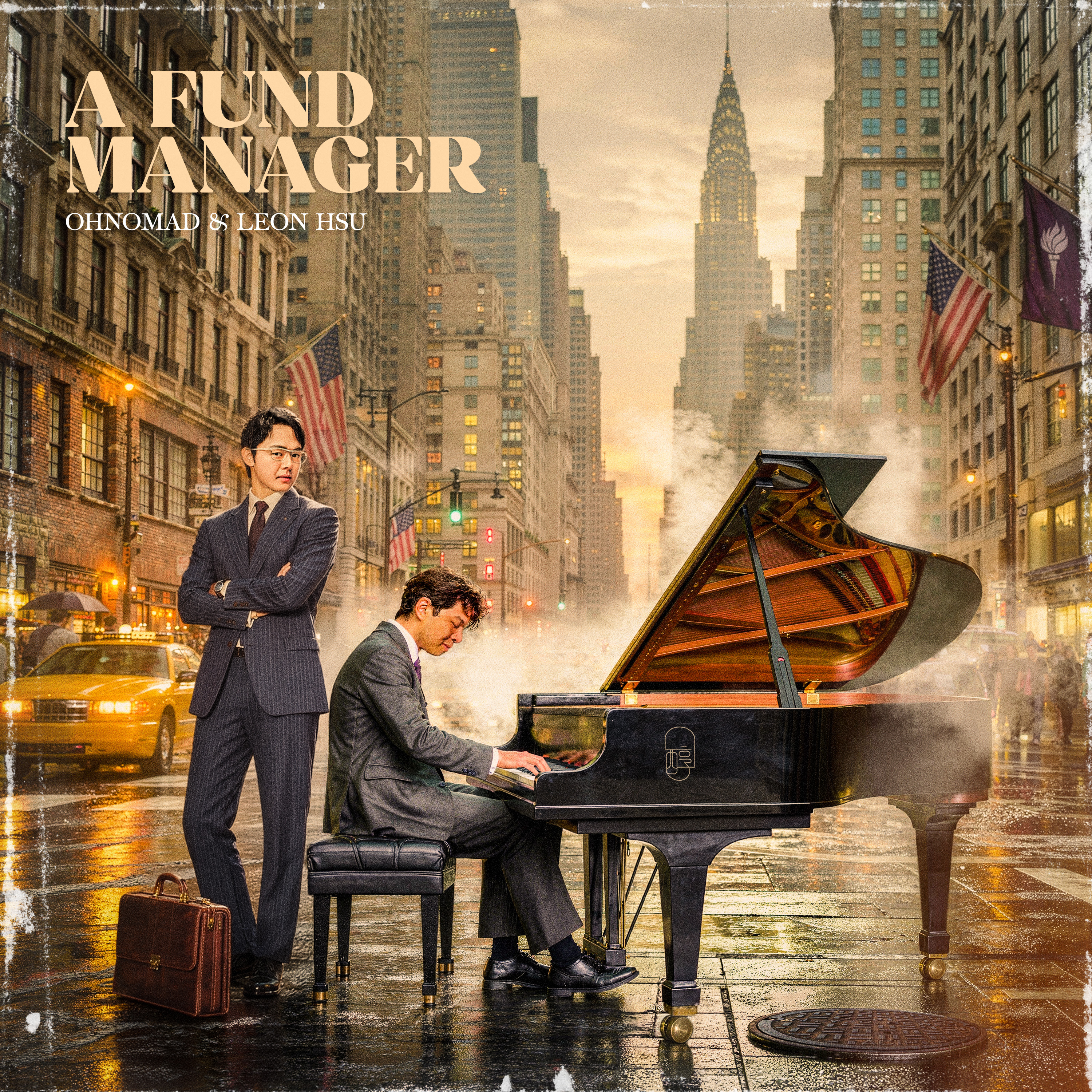
What was the inspiration behind the cover artwork for A Fund Manager?
I wanted the cover to visually bring together two worlds that rarely appear in the same artistic conversation: Wall Street and jazz.
The imagery draws inspiration from the atmosphere of New York City, where finance and jazz have both played such important historical roles. The contrast between the professional world of a fund manager and the expressive freedom of a jazz pianist represents the central philosophy of the EP. I was also drawn to the visual language of classic jazz album covers—their elegance, timelessness, and ability to communicate a story through a single image.
What was the creative process like when making A Fund Manager?
This project was different from my previous compositions because it was my first serious exploration of jazz.
My creative process usually begins with a concept rather than a melody. I first identify the philosophical or emotional message I want to communicate, then gradually develop musical ideas around it. For this EP, I began with four investment-related concepts that have been particularly meaningful throughout my career. I collaborated with Taiwanese jazz pianist Leon Hsu, whose training at the Eastman School of Music and experience in New York’s jazz scene brought a completely different musical perspective to the project.
As the concept composer, I wanted to establish the emotional direction while giving Leon sufficient freedom to bring his own interpretations and improvisation into the music.
We recorded the EP at the legendary Van Gelder Studio in September 2026. What I particularly enjoyed was discovering how a musician could take an idea rooted in financial philosophy and transform it into something expressive, spontaneous, and deeply human.
How long did it take to complete A Fund Manager?
In a sense, this EP took many years to develop because its underlying ideas came from my experiences throughout my investment career.
I’ve spent more than a decade studying financial markets and observing how people respond to uncertainty, risk, and technological change. However, the musical project itself belongs to a much more recent chapter of my creative journey. The EP was recorded in September 2026 at Van Gelder Studio and officially released on October 16, 2026.
One of the interesting things about composition is that the time spent actually writing or recording music is only part of the creative process. Sometimes, an idea that eventually becomes a five-minute composition has been developing in your mind for years.
A Fund Manager is an ongoing creative project, and I plan to release more musical pieces exploring this concept in the future.
Is there a specific song on A Fund Manager that speaks to you the most? If so, why?
“Stay Neutral” is probably the most personally meaningful track for me.
Throughout my investment career, I’ve learned that one of the greatest challenges isn’t understanding financial information, but managing our own emotions. When markets become euphoric, it’s easy to become overly confident. When markets collapse, fear can overwhelm rational judgment.
My experiences with Eastern philosophy, particularly Buddhist and Zen perspectives, have shaped how I approach these situations. The important distinction is between having conviction and becoming emotionally attached to that conviction. “Stay Neutral” reflects the mindset I try to cultivate in both investing and everyday life. Neutrality doesn’t mean indifference. It means being fully engaged with reality while remaining free from unnecessary emotional attachments.
I think that’s a lesson I’ll continue learning throughout my life.
What do you hope fans take away from A Fund Manager and your music in general?
I hope listeners discover that music can be more than entertainment. It can also be a way to explore ideas, question assumptions, and understand ourselves. For A Fund Manager, I hope listeners recognize that independent thinking and emotional balance are valuable far beyond financial markets.
We’re living through an extraordinary period of technological transformation, particularly with artificial intelligence. When confronted with something fundamentally new, we often interpret it through the framework of our previous experiences. Those experiences are valuable, but they can also limit our imagination.
I hope my music encourages people to remain intellectually curious, embrace different perspectives, and occasionally challenge what they believe they already know.
What’s next? Are you working on any upcoming projects, or do you have any upcoming shows that we should be on the lookout for?
I’m constantly exploring new musical ideas, particularly those that bridge science, technology, philosophy, and the human experience. And yes, you can definitely look forward to more new music from OHNomad in 2027!
Where can we follow you on social media?
You can follow OHNomad Music and listen to my compositions through these channels:
Official Website: https://www.ohnomadmusic.com
Instagram: https://www.instagram.com/owenshuang
YouTube: https://www.youtube.com/@OHNomadMusic
Spotify: https://open.spotify.com/artist/5asSvSp7qbvTXc8XGWKI9H
Apple Music: https://music.apple.com/us/artist/ohnomad/1659806791
Thank you for the great interview; wish you much continued success!