
With THE THEORY out now, we took some time to hear from MOMARZ. Read below to learn more about MOMARZ, the story behind THE THEORY, and what’s to come.
Hi MOMARZ! Let’s start with how did you choose your artist name?
The name, MOMARZ, is a professional fusion of my personal identity. “MO” represents my initials, while “Marz” is a long-standing nickname derived from my legal first name, commonly used by friends and family.
What city are you from, and where are you based now?
Born and raised in Sunnyvale, California. Currently, I’m based in the Boston area.
At what point in your life did you decide to pursue a career in music? How did you get started?
I started playing piano when I was five through a traditional music school in my hometown, but I never imagined pursuing music seriously until 2025. What changed was the landscape. Today’s digital distribution platforms make it possible for independent artists to share their work globally without the barriers that existed in the late ’80s and ’90s, when you basically had to rely on live shows or hope someone listened to your demo tape. In 2025, I switched over to Apple products, and that brought back a memory of experimenting with GarageBand in the early 2000s with friends from my middle‑school jazz band. I opened it again just out of curiosity, and it pulled me right back into creating. I ended up getting Yamaha and Korg keyboards and started exploring music from the ground up. Once I realized how accessible it was to distribute music on major platforms, everything clicked. I was hooked. Since then, making music has become a nightly routine for me, a few hours every evening where I’m fully immersed in building my sound.
How would you describe your sound?
I describe my sound as a hybrid of cinematic scoring, electronic production, and neoclassical piano. It’s music that builds scenes, not just songs, atmospheric, emotional, and intentionally spacious. If you imagine a film score colliding with electronic storytelling, that’s where my music lives.
Do you have any hobbies outside of music? What do you do to stay creative?
I enjoy drawing and reading sci-fi/history books. I get my inspiration and innovative ideas from working this process.
Who are some of your main musical influences?
The most influential figures in my early musical development were Daft Punk, Rob Dougan, The Prodigy, and The Chemical Brothers. My style attempts to blend the cinematic grandeur of Rob Dougan with the high-octane beats. I try to incorporate The Prodigy’s aggressive, rhythmic urgency and The Chemical Brothers’ dense, driving percussion, utilizing these hard-hitting frameworks to ground complex, piano-rooted melodies. Similar to Daft Punk, I prioritize strong melodic hooks and vivid synth textures, resulting in an “electronic-orchestral” sound that bridges the gap between a modern film score and a high-energy club track.
Who would be a dream to collaborate with?
My dream collaborations would be with any of the following: Daft Punk, Alan Walker, Orbital, Prodigy, Rob Dougan, and The Glitch Mob. Each of them shaped different parts of my musical DNA — from cinematic electronic textures to bold, innovative production. Working with any of them would be a full‑circle moment for me.
What’s one of the proudest moments of your music career so far?
One of the most meaningful moments for me was getting my album, THE THEORY, in a professional CD format for the first time. Holding it in my hands felt surreal. I grew up discovering electronic music legends by flipping through CDs at record stores, so seeing my own work in that same format hit me in a really personal way. It made the whole journey feel real — like I was stepping into the lineage of the artists who inspired me.
What would you say are the greatest lessons that you’ve learned so far?
I think it’s important to stay open to feedback and to always look for ways to refine your approach to making music. But at the same time, you have to stay true to your own sound instead of chasing whatever the industry trend is at the moment. In the end, you need to genuinely enjoy creating your music and enjoy listening to it yourself. Once you reach that point, nothing else really matters. You also have to be comfortable with the fact that people will interpret your music in their own way, and that’s part of the beauty of releasing music into the world.
Now onto your release, THE THEORY. What inspired this EP?
I’ve had professional musicians tell me that my music doesn’t always follow traditional music theory. Instead of seeing that as a limitation, I saw it as an opportunity. I thought, why not create an album built around my own approach — my own musical logic. That idea became THE THEORY, a project that reflects the way I naturally hear and construct sound, rather than trying to fit into a predefined framework.
What is the overall theme of THE THEORY?
The project reflects 16 songs the way I naturally hear and construct sound, rather than trying to fit into a predefined framework.
What was the inspiration behind the cover artwork for THE THEORY?
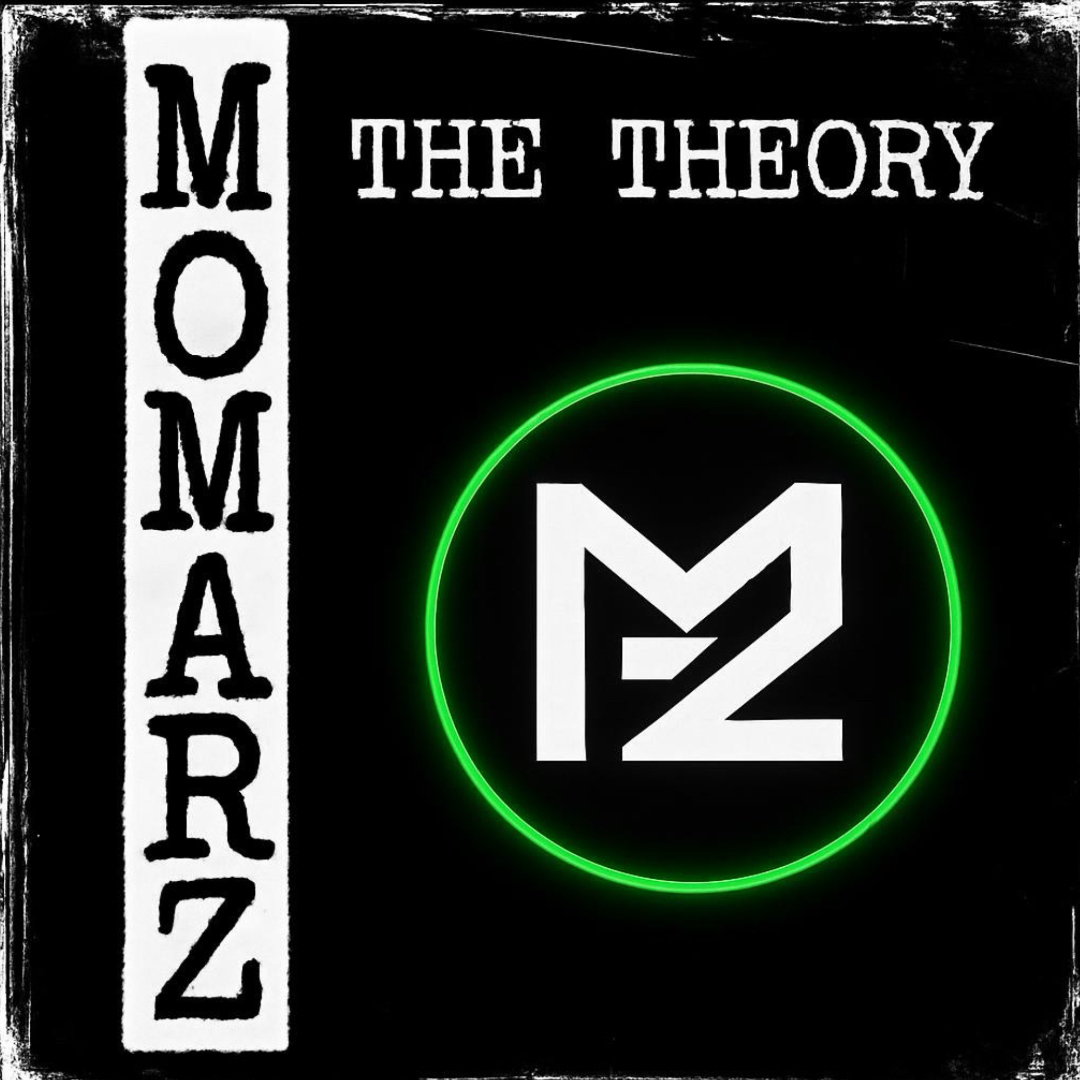
I wanted to showcase my new logo and present it under the concept of MOMARZ’s Music Theory. It represents my personal approach to composition, my own framework for how I build sound, structure, and emotion in my music.
What was the creative process like when making THE THEORY?
I approached production by developing a drum-first rhythmic groove to guide the vibe, later layering piano melodies and electronic sound design. I prioritize a long-term, iterative arrangement process, allowing tracks to evolve over months before adding vocal samples. Sound quality is ensured through rigorous car-stereo referencing to ensure mix translation. Finally, I solicit feedback from trusted peers and structured the EP/album, THE THEORY, for flow.
How long did it take to complete THE THEORY?
It took nine months to create the songs and prepare them for distribution, shaping each track until it matched the vision for the project.
Is there a specific song on THE THEORY that speaks to you the most? If so, why?
I’d say the song, “The Theory,” best represents my sound. It captures my personal approach to music theory — my own structure, instincts, and logic — all distilled into one track.
What do you hope fans take away from THE THEORY and your music in general?
I hope fans walk away from THE THEORY feeling like they’ve stepped into a world they can interpret in their own way. The project is built on my personal approach to music theory — emotion first, structure second — so I want listeners to feel something real, even if that feeling is different for everyone. If the music gives someone a moment of clarity, escape, or inspiration, then it’s done its job. My goal is for people to connect with the atmosphere and the storytelling, and to find their own meaning inside the sound.
What’s next for you? Are you working on any upcoming projects, or do you have any upcoming shows that we should be on the lookout for?
I’ve already begun working on my next album, Cinematronica, which I’m aiming to release in early 2027. As I develop the project, I’ll also be reaching out to record labels to see who might be willing to take a chance on me as a music artist, as long as our creative visions align. I’m looking for a partnership that supports the world I’m building and the direction my music is heading.
Where can we follow you on social media?
Instagram: @momarz99 (https://www.instagram.com/momarz99).
Thank you for the great interview; wish you much continued success!