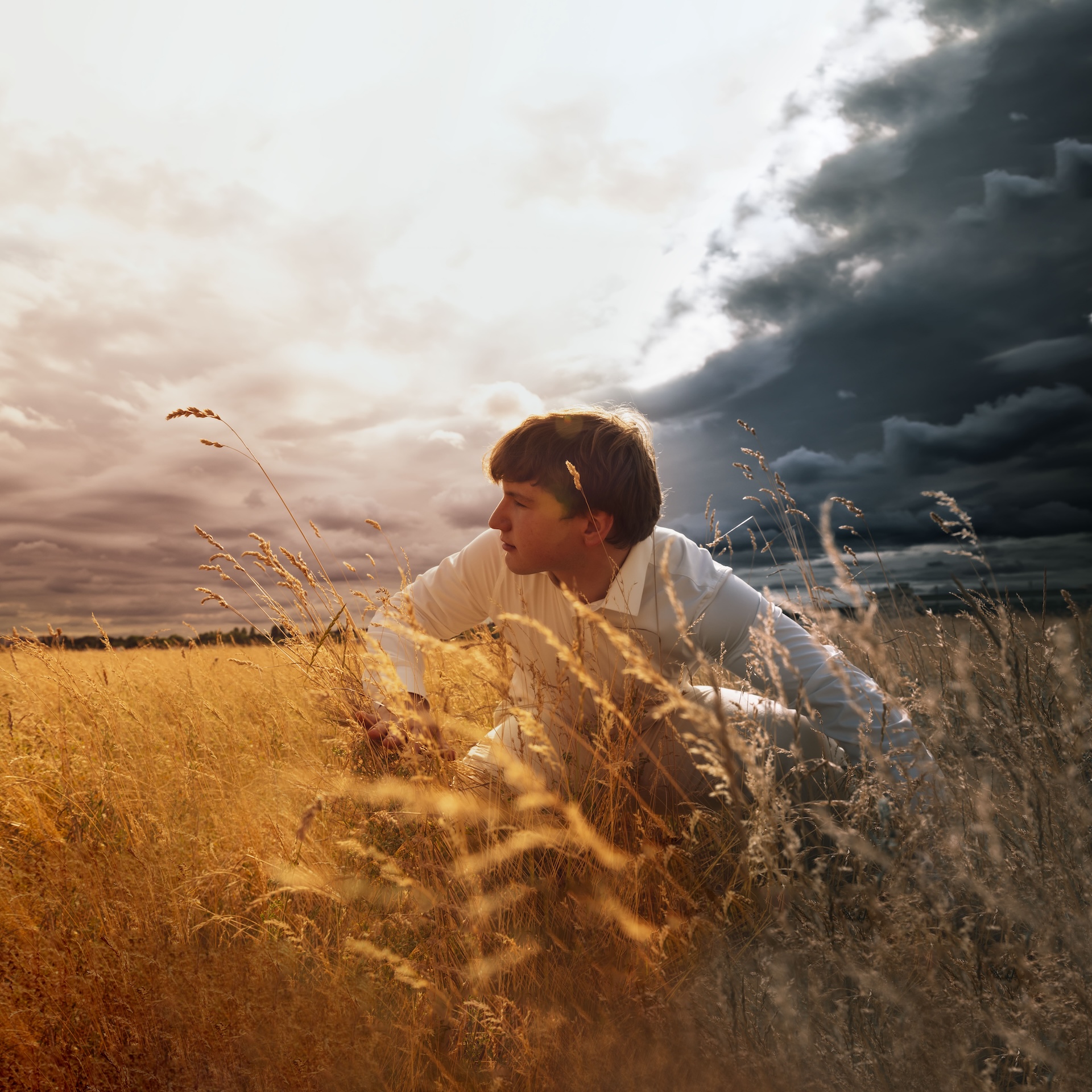
Kristen Banana crafts dream pop threaded with survival, shadow, and soft rebellion. After uprooting her life and retreating to the wild solitude of Alaska, she emerged with a sound that feels like whispered secrets under snowfall—cinematic textures, echo-washed synths, and breath-forward vocals that shimmer between fragility and strength.
Now based in Austin, Kristen Banana channels her history of reinvention into songs that glow with nostalgia, wanderlust, and quiet defiance. Her music invites listeners into worlds both intimate and expansive: northern lights, untold fairytales, and beauty unearthed in the wreckage.
Blurring the line between diary and daydream, Kristen Banana writes for the ones who’ve been forgotten—even by themselves—and leaves behind melodies that haunt like memory and heal like home.
With Lanternbones and Ghosts out now, we took some time to hear from Kristen Banana. Read below to learn more about Kristen Banana, the story behind Lanternbones and Ghosts, and what’s to come.
Hi Kristen Banana! Let’s start with how did you get your artist name?
Someone once joked that I should change my name to Kristen Banana because I make ‘dream pop with a peel.’ At first I laughed, but later I kept thinking about it. I started to see how much it fit me. I think of it as ‘dream pop with a peel,’ something playful on the surface, but hiding layers underneath. It’s about peeling things back, revealing what’s inside—unexpected sweetness, a little strangeness, and the kind of beauty that you only notice when you’re really paying attention. I like names that feel like secrets you get to keep unpeeling, and the more that I sat with it, the more it felt like it had been waiting for me all along. Now I can’t imagine going by any other name—it’s become inseparable from who I am and the music I make.
What city are you from and where are you based now?
I can’t say that I’m from any one place. I was born somewhere that I never went back to, and I think there’s a little wanderer stitched into my veins. I’ve lived in remote towns with just a few hundred people and in metros with over 10 million, moving across North America, Europe, Asia, and the MENA region. Just before Texas, I was in Chicago, and while I’ve felt comfortable almost anywhere, I never truly felt rooted. Texas changed that. It’s where I finally found my groove, a sense of home that carries all those faraway skylines, quiet forests, and neon nights into the music I make now—dream pop threaded with wanderlust, memory, and belonging.
At what point in your life did you decide to pursue a career in music? How did you get started?
I’ve been into music for as long as I can remember. I was the preschooler calling radio DJs to request my favorite songs and sitting in front of the stereo with headphones way too big for my head, listening for hours. I’ve always had a good ear. I made playlists with different genres for years and studied various artists’ full catalog. When COVID hit, I decided it was finally time to pursue my own music. I started small, experimenting with Audacity, just learning how to record my voice and layer simple tracks. From there, I moved into FL Studio, where I really dug into arranging songs, building textures, and shaping a sound that felt like me.
How would you describe your sound to readers who may not be familiar with you?
I’d describe my sound as dream pop threaded with storytelling—cinematic, emotional, and a little ethereal. It’s music that you can get lost in, built on echo-washed synths, warm basslines, and vocals that feel intimate but expansive, almost like they’re floating in their own atmosphere. I write like I’m painting scenes: northern lights in the distance, late-night city streets, quiet moments that feel bigger than they are. My songs are personal, but they carry that wanderlust edge, so whether you’ve lived them or not, they still feel familiar—like a memory that you didn’t know you had.
Do you have any hobbies outside of music? What do you do to stay creative?
I love to travel and go on road trips—it’s where I do some of my best thinking and find inspiration in unexpected places. I’m really into landscape photography, capturing little moments that feel like they belong in a story. I also love going to concerts, supporting community theater, and I’m an avid symphony-goer. Being around all those different kinds of art keeps me inspired—it reminds me that creativity isn’t just about making music, it’s about staying curious and soaking in the world around you.
Who are some of your main musical influences?
I have a ton of musical influences spanning all kinds of genres, but these are some standouts. Bill Miller is, to me, the greatest songwriter of our time—his storytelling cuts straight to the heart. The first time that I heard Moby, I was awestruck; my heart literally beat faster, and I couldn’t believe music could sound that beautiful. Le Trio Joubran is my all-time favorite band—I tell everyone about them. Their rooted fusion of Arabic and jazz, their emotional depth, their utter uniqueness…it’s breathtaking.
For rock, I can’t get enough of Billy Idol and Coldplay, which I know doesn’t track at all, but it works for me. For pop, I literally wake up to Madonna nearly every day—she’s the soundtrack to my mornings. Amy MacDonald has also shaped me a lot; her lyrics and style made a huge impact. And that’s only scratching the surface—there are hundreds more musical influences in my life and style.
What’s one of the proudest moments of your music career so far?
I’m so new to music, so every step feels huge. Honestly, just getting that first album completely put together and submitted was massive for me—it felt like proof that I could really do this.
What would you say are the greatest lessons that you’ve learned so far?
One of the greatest lessons that I’ve learned so far is that making music is 50% music and 50% business. I quickly realized the work isn’t done when the songs are finished—it’s just beginning. Suddenly, I’m managing social media, building a website, designing merch, pitching to blogs, marketing, choosing distributors, creating cover art, connecting with fans and artists, and constantly planning my next steps.
It can feel overwhelming—I wake up every day with a to-do list a mile long—but I’ve learned to focus on moving the needle, even if it’s just a little bit each day. Progress compounds, and staying consistent is just as important as creativity. That balance between art and discipline has been the biggest teacher so far.
Now onto your release, Lanternbones and Ghosts. What inspired this album?
Lanternbones and Ghosts was inspired by a season of my life where everything felt stripped down to its core. I spent time in Alaska during a period of solitude and upheaval, and the stillness there forced me to sit with my thoughts, memories, and emotions in a way that I never had before. That landscape—the frozen roads, endless skies, and quiet that felt almost holy—gave me space to unravel and slowly put myself back together. These songs are pieces of that process: heartbreak, healing, and rediscovering the strange beauty in both.
What is the overall theme of Lanternbones and Ghosts?
At its heart, Lanternbones and Ghosts is about carrying your light through the dark and making peace with the things that haunt you. The ‘lanternbones’ are those fragile, but enduring sparks of hope and resilience, while the ‘ghosts’ are the echoes of who we were, the memories that linger and shape us. It’s about transformation—learning to let your past walk beside you without letting it weigh you down, and finding quiet strength in the places that you once felt broken.
What was the creative process like when making Lanternbones and Ghosts?
The creative process for Lanternbones and Ghosts happened mostly at night. The night has always been the loudest for me—when the world is still, my thoughts have nowhere to hide. I’ve struggled with insomnia for years, and somewhere along the way, those sleepless hours turned into songs.
Some lyrics came rushing out in a single sitting, raw and unfiltered, while others stretched across weeks, slowly pieced together in the quiet. That late-night stillness became my space to be honest, to untangle everything I’d been carrying.
How long did it take to complete Lanternbones and Ghosts?
Lanternbones and Ghosts took shape over the course of about two years. I started writing during a really transitional time in my life, and the songs evolved right alongside me. Some of them came quickly, like they’d been waiting for me to finally listen, while others took months of reworking and reflection to get right.
It wasn’t a straight line—I’d write, set things aside, come back with fresh eyes, and watch the pieces slowly fall into place. In a way, the album took exactly as long as it needed to. It’s a snapshot of everything that I went through during that time, and finishing it felt like closing a chapter I’d been living in for far too long.
Is there a specific song on Lanternbones and Ghosts that speaks to you the most? If so, what is it called, and what is it about?
The song that speaks to me the most is ‘Ghosts in the Evergreen.’ It’s the most special to me because it marks a turning point—a moment in time that can never be repeated. I wrote it after finding a crashed plane in the forest while I was in Alaska. It was just there, silent and snow-covered, guarded by wolves, like the world had simply forgotten it.
Standing there, I felt this overwhelming mix of sorrow, reverence, and peace. The silence was deafening in the best way, and it was like the forest had claimed the wreckage as its own. No memorial, no names—just snow, trees, and wolves keeping watch. Writing that song felt like putting that moment into amber, preserving the exact stillness I felt. It reminded me that some stories live on even when no one’s left to tell them, and that not everything lost is broken—it can still be strangely, hauntingly beautiful.
What message do you hope fans take away from your music and from Lanternbones and Ghosts?
I hope people take away that you can turn tragedy into beauty, experience into wisdom, and a life lived into storytelling. That’s really the heartbeat of Lanternbones and Ghosts. So much of this album was born from difficult moments, but I wanted to show that pain doesn’t have to be the ending—it can transform into something meaningful, something that connects us.
I also hope people simply enjoy the music when their heart needs it. Whether it’s comfort, catharsis, or just something to get lost in for a while, I want my songs to be a place people can go when they feel too much or even not enough. If someone listens and feels understood, or finds a bit of peace in the melodies, that’s everything that I could ask for. My music is about finding light in the dark, and I hope it helps others see that theirs is still glowing too.
If Lanternbones and Ghosts were a film, who would direct it and what would the opening scene look like?
If Lanternbones and Ghosts were a film, I’d want it directed by either Denis Villeneuve or Guillermo del Toro. Villeneuve captures silence in a way that feels deafening and intimate, while del Toro finds beauty in ghosts, memory, and the strange.
The opening scene would be a small, dimly lit room late at night. A woman sits on the floor with maps spread out, cold-weather gear stacked neatly beside her, a few empty bottles of red wine on the table, and a satellite phone blinking faintly nearby. The camera lingers on her hands as she folds a worn photograph and slides it into her pack. There’s no music—just the muted sound of the zipper closing, her breath catching, and the quiet creak of floorboards.
She pauses, staring out the window, tears slipping down unnoticed. No words, no explanation. Just a heavy stillness and the unspoken understanding: she’s leaving because she needs to vanish.
Cut to: the hum of an airplane cabin. She sits by the window, her face reflected in the glass, watching untouched, snowcapped mountains drift below. The silence from the room follows her here, broken only by the low rumble of engines—like even the world itself is holding its breath as she disappears into the white.
What’s next for you? Are you working on any upcoming projects, or do you have any upcoming shows that we should be on the lookout for?
I’m currently working on my next album, Red Flags and Broken Halos. It’s about the relationships that I’ve had—the good, the bad, and everything in between—and the lessons that I’ve learned along the way. It’s very raw and unfiltered, and I think it will really resonate with women who’ve been through those ‘red flag’ relationships and come out stronger.
Beyond that, I’m also working on a song that’s really close to my heart: a Texas anthem about how I finally found my groove and planted roots here. It’s a love letter to this state and how it gave me a sense of home after so much wandering. Both projects feel like natural next steps—more storytelling, more honesty, and music that continues to connect my personal experiences to something universal.
Where can we follow you on social media?
Instagram: @kristenbanana.music
Facebook: Kristen Banana
TikTok: @kristenbanana
SoundCloud: Kristen Banana
Spotify: Kristen Banana
Before you go, let’s ask you something off topic. If you were writing an autobiography, what would the title be?
The Girl Who Carried Maps – Every chapter would start somewhere new—a city skyline, a snowy forest, a sun-bleached coast. It’s about searching, moving, and collecting pieces of myself across the world until I finally found where I was meant to plant roots.
Thank you for the great interview; wish you much continued success!