Hi William Viera! Tell us about who you are and where you are from.
Hi, my name is William Viera. I grew up in Cuba and later came to the United States after a very complicated life journey. Coming from a dictatorship and then facing the struggles of starting over here gave me a raw and complex perspective on human nature. I’ve seen the worst sides of two opposite systems, and that experience fuels my vision as a filmmaker, often dark, critical, and unapologetic.
As a writer and director, it’s very difficult to place me inside a single genre. My work moves through horror, dark humor, absurdism, and drama, often blending elements to create something unsettling and thought-provoking. My influences include Martin Scorsese, Quentin Tarantino, Lars von Trier, Wong Kar-wai, Yorgos Lanthimos, David Lynch, and Gaspar Noé. Stylistically, I feel that I exist somewhere between von Trier and Lanthimos, embracing both the absurd and the disturbing to expose the contradictions of human beings.
How did you get your start in the film industry, and how long have you been in the entertainment industry?
I first started in 2021 with a short film after coming to the United States, and then in 2024, I picked up the camera again and continued making short films, music videos, and other projects. To be honest, I don’t really know what ‘the industry’ is supposed to mean because everything I’ve done has been self-financed and built from the ground up. I see myself as a director and an author, not someone who just fits into a system. It’s a tough and competitive world, and for that reason I’ve had to find my own path, prove myself through the work, and create opportunities rather than wait for them.
My goal in the future is to move into feature films, but for now, I’m happy with the work that I’ve been doing. Each project has taught me a lot, and I want to keep learning and growing with every step that I take as a filmmaker.
What led you to choose this career path? What makes your story unique?
What led me to this career path is my own pain and trauma. Art became my therapy, the only way that I could process what I’ve lived through, and filmmaking gave me a voice when I didn’t have one. My story is unique because every film that I make is not just a project, but a reflection of survival. In my work, I often kill my characters to remind myself of the things that I escaped from, to remind myself that I am alive, and to show both myself and humanity the consequences of going to extremes. Extremism is what turns people into something destructive, and through cinema, I confront that truth.
What was the first film that you directed?
My very first attempt at making a film was actually a failure. It was pure chaos, badly planned, and at one point, the police even showed up on set. I don’t really consider that my beginning. The first film that I truly completed was The Addiction in 2024, link:
https://youtu.be/5G9yYrVxr4M. That project became a turning point for me. Even though it wasn’t meant to be, I saw it as my last chance to test whether I had real talent or not. I was very afraid, but I managed to finish it, and that experience confirmed that filmmaking is where I belong.
How many productions have you directed and written so far?
So far, I’ve directed and written around fifteen productions. They include experimental films, short films, music videos, skits, and even some spec commercials. Each project has been a different way for me to explore my voice and push myself creatively.
What genres do you specialize in?
I specialize in horror, dark comedy, drama, and thriller, and I often explore surrealism as well. Many times, I like to combine these genres, turning them into something new that feels unsettling, absurd, and dramatic all at once.
What is your creative process for filmmaking?
I never really know where my ideas come from, but once I have one, my process usually starts by imagining the ending. If I know how it ends, then I can see the direction the whole story will take. From there, I move into the treatment, where I discover the theme that I want to explore.
After that I focus on the characters, writing descriptions to really understand who they are and what drives them. Then, I move into the script itself, which I usually rewrite three or four times until I feel it truly works.
What is your personal ritual?
Something unique about me is that whenever I get a new idea, I create a playlist of music connected to that story. It’s completely irrational, but once I have that playlist, I listen to it while I write. It works almost like a drug. I can write for eight hours straight without even noticing the time.
What are some of your most memorable moments on set?
One of my most memorable moments on set was during my very first shoot. My producer was supposed to bring breakfast, lunch, and dinner for the crew. We started at 8 in the morning, and he finally showed up at noon, hungover, and immediately started throwing up. The worst part was that he threw up all over the food that we had for the day. Excellent.
As for positive moments, I honestly don’t know. For me, the most meaningful moment is always when we finish a project and realize we actually made it. Being on set as a director is beautiful, but it is also chaos and, in many ways, a kind of torture.
If you were not a filmmaker, what would you be doing?
If I wasn’t making films, I think that I would be an anthropologist. I’ve always been fascinated by human behavior, culture, and the darker aspects of society. In a way, that’s already what I do through cinema. I just use images instead of textbooks.
You are also a photographer. What types of photography do you specialize in?
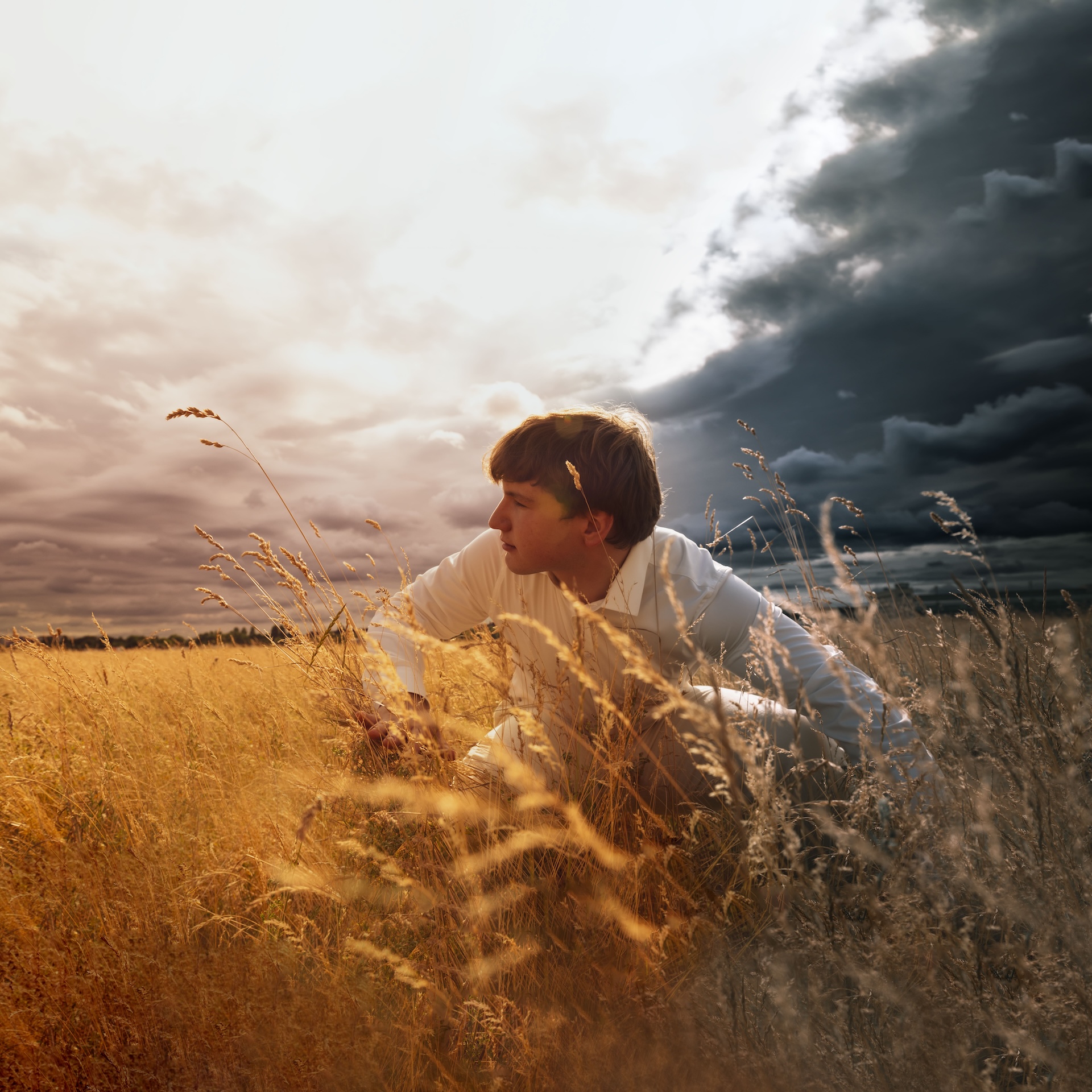
In photography, I focus on surreal and experimental work. I like creating images that feel dreamlike, unsettling, or abstract, almost like fragments of a story that could exist inside or outside of a film. For me, photography is another way to explore the same ideas I work with in cinema, but in a single frame instead of through time. I also do commercial photography of course, I have to find my ways of making some cheddar.
What aspects of photography do you find similar and different from directing?
Photography and filmmaking are very different mediums. In photography, you capture a single moment, and usually you only need to communicate with a very small number of people. It’s also much cheaper compared to filmmaking, which requires bigger budgets and larger teams. The similarity is that both demand vision and direction, but in photography, I enjoy the simplicity of working with fewer people, while in filmmaking I embrace the chaos of leading an entire production.
Do you have any role models that have guided your journey?
Yes, I would say my role models are filmmakers like Lars von Trier, Yorgos Lanthimos, David Lynch, Gaspar Noé, Wong Kar-wai, Scorsese, and Tarantino. They showed me that cinema can be personal, provocative, absurd, and at the same time deeply human. I don’t follow anyone blindly, but their work reminds me that it’s possible to take risks and still create something meaningful.
What words of advice do you have for people with similar aspirations?
Honestly, I don’t know if I have the right words of advice. The only thing that I can say is to follow what you truly want to do and don’t let yourself be manipulated by the aspirations of others. Accept advice, listen, and if it serves you, use it, and if not, throw it out the window. Be tenacious and keep moving forward. Don’t let the ghosts of your past control you. Use art as a way to exorcise them and to calm whatever you carry inside of you. Put it out there—that’s why we are artists. And most importantly, never stop creating.
Any other endeavors or upcoming projects that we should currently be on the lookout for from you?
Yes, I have two upcoming projects that will soon be heading into festivals. One is Shattered Petals and the other is The Man I Was. I’m currently finishing both of them, and they will start their festival runs very soon. In addition, this coming January, I’ll be filming another short film, continuing to expand my body of work and my voice as a director.
Where can we follow you on social media?
You can follow me on Instagram here:
https://www.instagram.com/reel/DKeHqNVuNEn/
And also on YouTube at: https://www.youtube.com/@vieravisuals
I post updates about upcoming projects, behind-the-scenes from sets, photography work, experimental ideas, and more.
Thank you for the great interview; wish you much continued success!