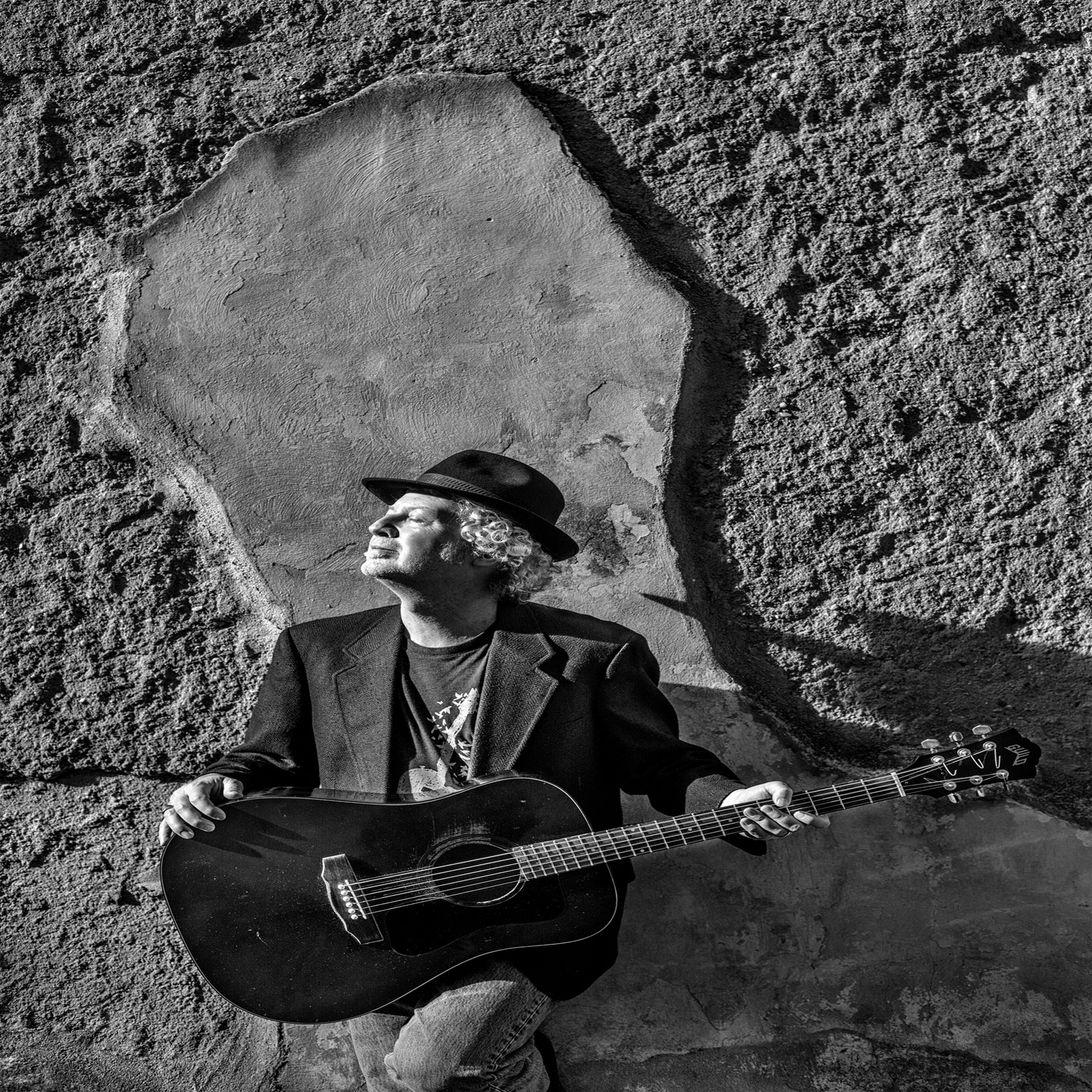

With “What Living Is For” out now, we took some time to hear from George Collins Band. Read below to learn more about George Collins Band, the story behind “What Living Is For,” and what’s to come.
Hi! Let’s start with how did you get your artist name?
It’s very simple. My name is George Collins, but when I started getting back into music a few years ago, I saw that there were several other artists and musicians out there with the same name – it’s fairly common. However, when I checked the availability of artist names on domain registers and across social media, I found that George Collins Band was available pretty much everywhere. I realized that having the same name across all platforms is important for branding purposes and marketing consistency, and since I work with other musician on recording my songs and we sound like a band, I grabbed George Collins Band everywhere I could – and here I am!
What city are you from, and where are you based now?
I was born in Washington, DC; I grew up mostly in northern New Jersey with a stint in Tehran, Iran in high school. I went to college and grad school at the University of Virginia in Charlottesville, and I have lived in Prague, Czech Republic since 1992 (apart from a couple years in London in the late 1990s). I have also had a place in Key West, Florida since 2007, where I try to spend as much time as I can. So, I’m a bit of a mongrel!
At what point in your life did you decide to pursue a career in music? How did you get started?
I fell in love with music as a little boy – my earliest memories are of me sitting in the family rec room listening to The Beatles’ “Rubber Soul” when it came out in December 1965, and I was just turning four years old. I got my first guitar then and started writing songs immediately, even though I didn’t know how to play!
I played in dozens of bands and wrote hundreds songs during my student years, and paid my way through grad school by performing as a solo acoustic act in clubs and pubs around Charlottesville.
After grad school I pivoted toward a career in business, from which I retired several years ago. For the past decade, I have been a full-time musician, novelist and screenwriter – and father.
How would you describe your sound to readers who may not be familiar with you?
I brand my music as “Timeless Americana Rock,” which can cover a wide variety of styles, but to put it very simply I would describe my sound as a mix of Bruce Springsteen and Tom Petty with a dash of The Beatles and Billy Joel.
Do you have any hobbies outside of music? What do you do to stay creative?
Apart from music, I am also a novelist and screenwriter, in addition to being a full-time dad to my young daughters, so all these activities keep me very busy.
I’ve been an avid golfer my entire life, but haven’t played these past few years as I’ve been so busy with my music and writing.
I do love to travel and explore new places, and I consider myself a bit of a wine aficionado – I often visit wineries on my travels.
Who are some of your main musical influences?
Too many to mention! But if I had to narrow it down, I’d say The Beatles, the Rolling Stones, Bruce Springsteen, Tom Petty, Billy Joel, Van Morrison, Nick Lowe, Elvis Costello, Steely Dan, Dire Straits and XTC. I’m also a huge fan of Motown and classic Soul/R&B music, as well as jazz, blues and classical.
Who would be a dream to collaborate with?
My dream music collaboration would be writing a song with Paul McCartney – but since he doesn’t seem to need my help, I would settle for shaking his hand one day and expressing my profound gratitude for his decades of creation and inspiration!
What’s one of the proudest moments of your music career so far?
Two come to mind, actually.
A decade ago, after a layoff of twenty years, I made a deal with one of my friends in Prague to perform at his restaurant for their annual Fourth of July cookout party. So, I practiced for months to re-learn all the old songs from my repertoire and get my voice and fingers back in shape. I played a four-hour show to a packed house, and people were amazed because most of them had no idea I’d been a musician in my younger years. It was a very emotional night for me, as it brought back a flood of memories of my youthful performances, and I resolved to keep going in that direction.
Fast forward to last summer, and I’m visiting some of my musical friends in Nashville. These A-list, Grammy-nominated songwriters, whom I’d befriended in recent years, arranged for me to perform at the iconic Bluebird Café, and sitting in that hallowed space, playing my latest single and with the audience paying rapt attention, is one of the highlights of my musical career.
What would you say are the greatest lessons that you’ve learned so far?
It’s never too late to get back to your dreams – but you will have to work for it!
Now onto “What Living Is For.” What inspired this song? What is “What Living Is For” about?
The first verse popped into my head several years ago. I had no idea what it was about, but I wrote it down in my notebook. Then about two years ago, I was noodling around on my guitar and came up with this killer riff, and I immediately knew it was meant to be paired with that lyric. With the riff’s high energy and forward momentum, I knew the song would be positive and uplifting, with lyrics about going for the gusto and living life to the max.
What was the inspiration behind the cover artwork for “What Living Is For?”
Once the track was completed, I sent it over to a graphic artist that I’ve been working with and described what I wanted: a guy on a hang glider soaring over a mountain range. She offered a variety of options, and I chose the one you see on the cover, which perfectly captures the positive, expansive, free-wheeling theme of the song.
What was the creative process like when making “What Living Is For?”
As I mentioned above, once I matched that first verse lyric with the guitar riff, I knew I was on to something. I considered various lyrical scenarios, then, following from the opening line, I hit upon the idea of a guy climbing up a mountain and jumping off with a hang glider. These images are perfectly captured in the lyric video for the song, which just premiered on my YouTube channel, George Collins Band.
I quickly realized that the line “What Living Is For” would be the title of the song and would repeat at the end of each verse (in lieu of a Chorus), so I had to make the third line of each verse rhyme with “for.” I hit my rhyming dictionary and jotted down as many words as I could and them started playing around with various lines in keeping with the overall theme of the song.
I played different versions of the work-in-process to several of my songwriting mentors, who made very helpful suggestions and helped me shape it into its final form.
How long did it take to complete “What Living Is For?”
From coming up with the initial lyric idea to having the song in its final form took several years. And then recording, mixing and mastering the song took another year – although the completed track sounds live, it was actually recorded by a number of musicians and producers working in a variety of studios and locations around the world. Music production technology these days is truly amazing!
What is your favorite lyric in “What Living Is For” and why?
I have several graduate degrees, one of which is a Masters Degree in English Literature. I have read a great deal of poetry and fiction, which certainly informs my songwriting. For example, the bridge of “What Living Is For,” stating an intention to “suck the marrow out of life,” is a direct quote from the opening of Thoreau’s masterpiece, Walden, which I studied in depth many years ago in grad school. I wanted to honor this great writer’s legacy and his wish “…and not, when I came to die, discover that I had not lived.” As T.S. Eliot once said, “Mediocre artists borrow; great artists steal.”
What do you hope fans take away from “What Living Is For” and your music in general?
I am generally a positive and optimistic person by nature, and I believe that comes through in my songwriting, so I hope people feel empowered and more alive after listening to my music – whether it’s “What Living Is For” or even if it’s a sad or more reflective song.
What’s next for you? Are you working on any upcoming projects?
I’m currently releasing a new single from New Ways of Getting Old every eight weeks, with the videos rolling out shortly thereafter. I am also writing songs for my next album (working title: No Artificial Ingredients). In parallel, I’m actively pitching to Hollywood producers a screenplay that I’ve adapted from a novel that I’ve written, a “jazz-infused love story” called PLAYING THE CHANGES, which will be published later this year. So, there is never a dull moment around here!
Where can we follow you on social media?
Here are all my links:
Official Website: https://georgecollins.com
Instagram: https://www.instagram.com/georgecollinsband
Facebook: https://www.facebook.com/GeorgeCollinsBand
Twitter: https://twitter.com/geocollinsband
Spotify: https://open.spotify.com/artist/2mM7PMZoBjwqAEHCDFaJxT
YouTube: https://www.youtube.com/@georgecollinsband
SoundCloud: https://soundcloud.com/georgecollinsband
Apple Music: https://music.apple.com/us/artist/george-collins-band/1565455805
Amazon Music: https://music.amazon.com/artists/B093TWQXC9/george-collins-band
Deezer: https://www.deezer.com/us/artist/131504642
Tidal: https://store.tidal.com/cz/artist/24637398
Bandcamp: https://georgecollinsband.bandcamp.com/
TikTok: https://www.tiktok.com/@georgecollinsband
LinkedIn: https://www.linkedin.com/in/georgeedwardcollins/
Before you go, let’s ask you something off topic. What is your favorite food?
My favorite food is a French dish that my wife has perfected: Duck Breast seared with Cinnamon and topped with Raspberry Sauce, accompanied by Au Gratin Potatoes and washed down with a bottle of St. Emilion Grand Cru – the older, the better!
Thank you for the great interview; wish you much continued success!